
Reading Time: 5 minutes
DIY Air Duct Cleaning vs Professional Houston: Making the Right Choice for Your Home
- DIY duct cleaning is limited to surface maintenance like filter replacement and vent cover cleaning
- Professional cleaning is essential for mold, pest infestations, post-flood contamination, and visible debris
- The EPA does not recommend routine duct cleaning but advises it when specific contamination indicators exist
- Houston’s high humidity creates unique challenges that often require professional intervention
- Beware of scam companies offering dramatically low prices or making unsupported health claims
+
- Why Houston Homeowners Consider Air Duct Cleaning
- What You Can Safely Do Yourself
- Where DIY Cleaning Falls Short
- Scenarios That Demand Professional Intervention
- What Professional Air Duct Cleaning Actually Involves
- How to Identify a Reputable Cleaning Company
- Cost Considerations and What Influences Price
- Frequently Asked Questions
Houston homeowners face a unique challenge when it comes to maintaining indoor air quality. The combination of high humidity, extended cooling seasons, and allergen-rich air creates conditions that demand careful attention to HVAC system maintenance. When dust starts appearing around vents or a musty smell emerges from the system, the natural question arises: should you tackle air duct cleaning yourself, or is it time to hire professional help?
Understanding the distinction between what you can safely accomplish at home and what requires professional intervention is essential for protecting both your HVAC system and your family’s health. This comprehensive guide examines the practical realities of DIY air duct cleaning versus professional services in the Houston area, helping you make an informed decision based on your specific circumstances.
Why Do Houston Homeowners Consider Air Duct Cleaning?
The subtropical climate in Houston creates specific conditions that prompt many residents to think about their air ducts. HVAC systems in this region often run for extended periods, circulating air through ductwork that may accumulate dust, debris, and moisture-related contaminants over time. Concerns about allergens, humidity control, and overall indoor air quality frequently drive homeowners to explore their cleaning options.
However, it is important to understand that the Environmental Protection Agency does not recommend routine air duct cleaning. According to EPA guidance, cleaning should be performed on an as-needed basis rather than as a regular maintenance task. This distinction matters because it shifts the focus from arbitrary scheduling to actual indicators that cleaning might provide genuine benefit.
“They did a fantastic job. The Houston allergens and poor air quality in my home were problematic. Scheduling was easy, and the team was professional and thorough.”
What Exactly Can You Do Yourself?
Before diving into the comparison between DIY and professional approaches, it helps to clarify what basic maintenance tasks fall within a homeowner’s reasonable capabilities. Regular filter replacement stands as the single most important maintenance activity you can perform. A clean filter prevents debris from entering the duct system in the first place and maintains proper airflow throughout your home.
Cleaning visible registers and grilles is another straightforward task. These components collect dust and can be removed, washed, and dried without specialized equipment. Similarly, vacuuming around vent openings with a standard household vacuum removes surface-level accumulation that might otherwise be drawn into the system when the blower activates.
DIY Maintenance Checklist
| Task | Frequency | Tools Needed |
|---|---|---|
| Replace air filters | Every 1-3 months | Replacement filter |
| Clean vent covers | Every 3-6 months | Soap, water, soft brush |
| Vacuum around vents | Monthly | Household vacuum |
| Visual inspection | Quarterly | Flashlight |
Where Does DIY Cleaning Fall Short?
The fundamental limitation of do-it-yourself duct cleaning lies in accessibility and equipment. Most household vacuums cannot reach beyond the first few inches of ductwork, leaving the majority of the system untouched. The main trunk lines, branch ducts, and connections remain beyond the reach of consumer-grade tools.
Additionally, dust that has settled in air ducts typically adheres to the interior surfaces. As noted in EPA documentation, this settled dust does not necessarily enter living spaces unless disturbed. Attempting to clean ducts without proper containment equipment can actually worsen air quality by releasing particles that were previously stable.
Common Mistakes Made During DIY Attempts
Homeowners attempting their own duct cleaning frequently make errors that create more problems than they solve. Using household brushes or improvised tools to reach into ducts can damage flexible ductwork, creating tears that allow conditioned air to escape and unconditioned air to enter. This damage reduces system efficiency and can lead to costly repairs.
Another frequent mistake involves using chemical sprays or deodorizers inside ductwork. These products may leave residues that interact negatively with duct materials, particularly internal insulation. The EPA specifically cautions against applying chemical treatments without understanding their potential effects on system components and indoor air quality.
The Insulation Problem
Many Houston homes have ductwork that includes internal insulation or runs through insulated spaces like attics. When this insulation becomes wet or develops mold, it generally cannot be effectively cleaned through any method. According to EPA guidance on mold in ducts, affected insulation typically requires removal and replacement rather than cleaning. Attempting to clean moldy insulation yourself not only proves ineffective but may spread contamination throughout the system.
Flat Rates | No Hidden Fees | Same-Day Service Available
Scenarios That Demand Professional Intervention
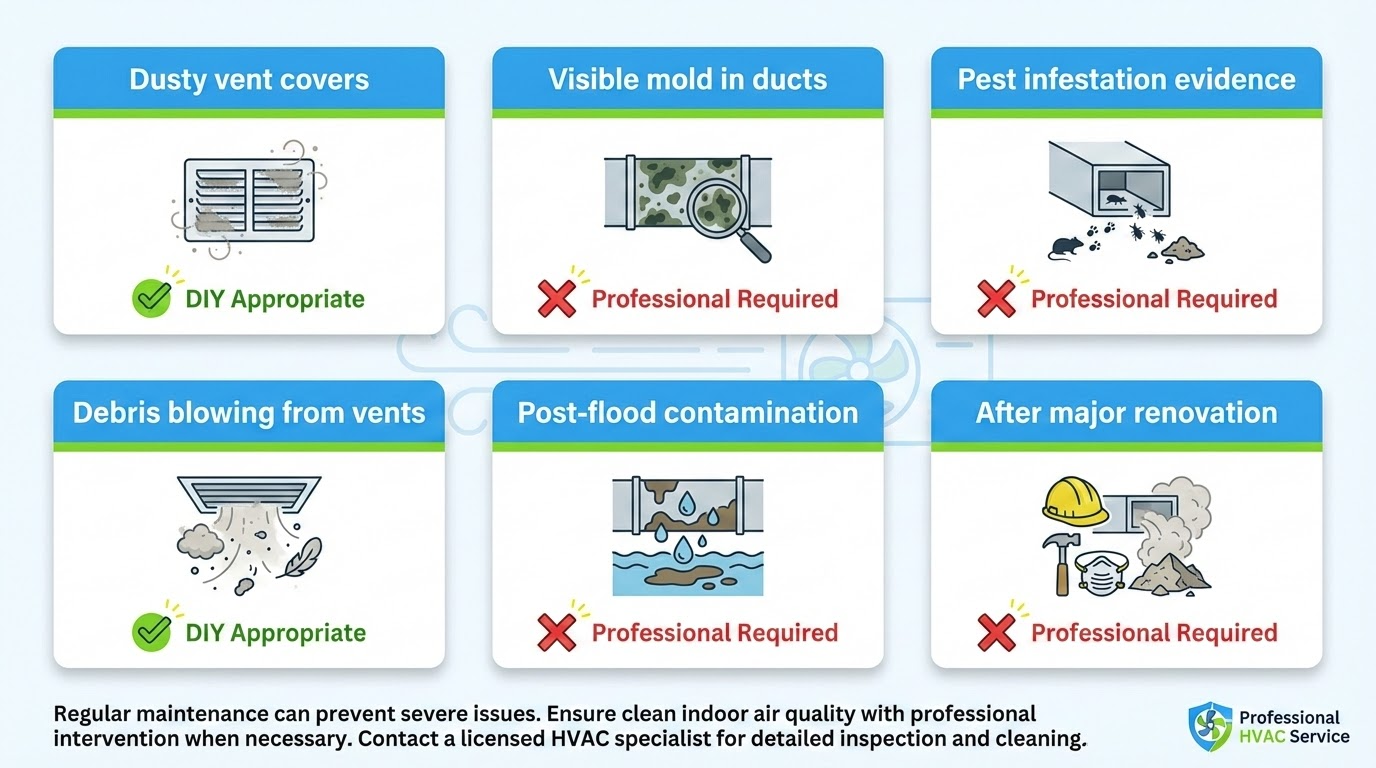
Certain situations clearly require the expertise and equipment that only professional services can provide. Recognizing these scenarios helps homeowners avoid wasting effort on DIY approaches that cannot address the underlying issues.
Visible mold growth inside ducts or on other HVAC components represents one such scenario. Mold remediation involves more than surface cleaning; it requires identifying and addressing the moisture source, proper containment during removal, and verification that the problem has been resolved. In Texas, mold remediation work involving areas of 25 square feet or more falls under specific regulatory requirements.
| Situation | DIY Appropriate | Professional Required |
|---|---|---|
| Dusty vent covers | Yes | No |
| Clogged air filter | Yes | No |
| Visible mold in ducts | No | Yes |
| Pest infestation evidence | No | Yes |
| Debris blowing from vents | No | Yes |
| Post-flood contamination | No | Yes |
| After major renovation | No | Yes |
Post-Flood Situations in Houston: A Critical Consideration
Houston’s vulnerability to flooding events creates situations where professional duct cleaning becomes essential rather than optional. When floodwater enters a home, ductwork running through affected areas may become contaminated with sediment, bacteria, and organic matter that creates serious health risks.
The Texas Department of Insurance emphasizes the importance of prompt action and proper documentation following water damage. Attempting to clean flood-contaminated ducts without professional equipment and expertise risks incomplete remediation and potential health consequences. Professional services provide the containment, cleaning power, and verification processes necessary to restore safety.
What Does Professional Air Duct Cleaning Actually Involve?
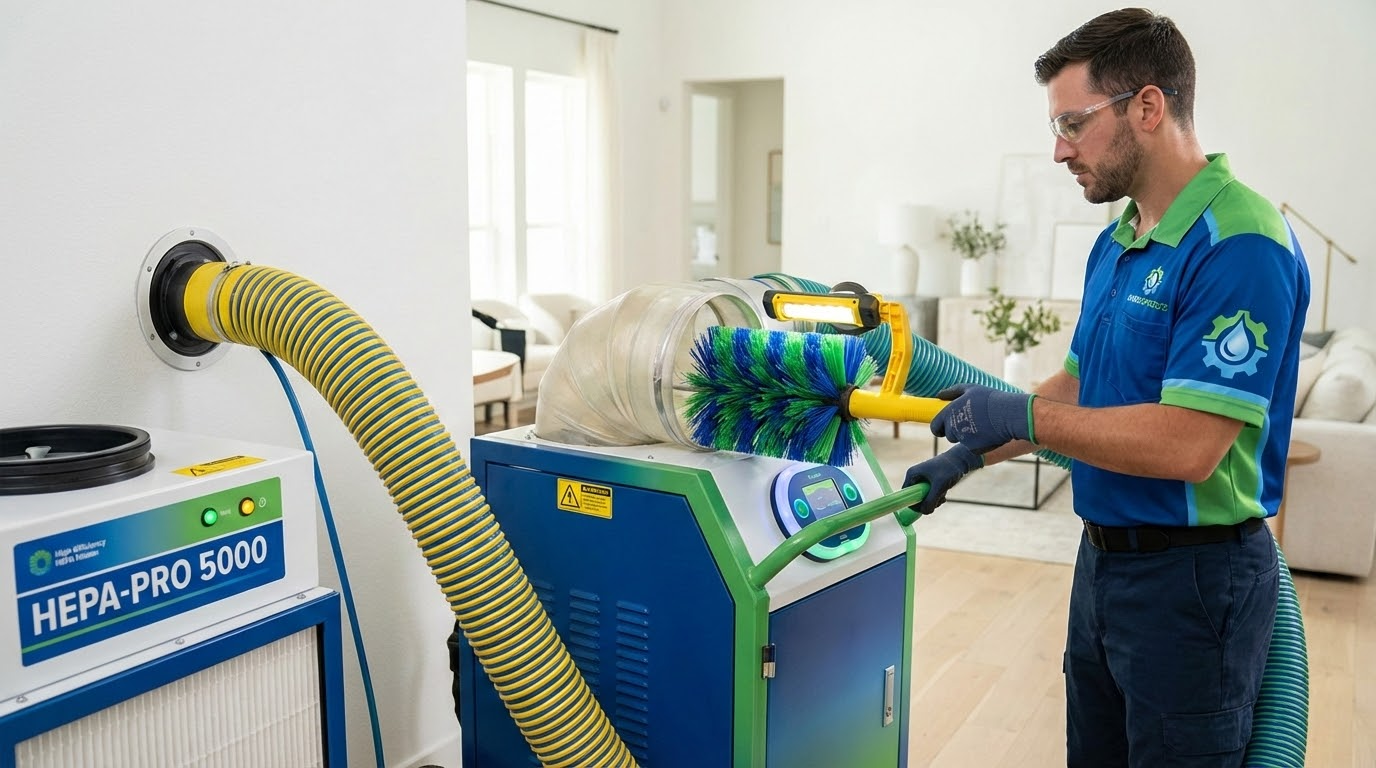
Understanding what professional service entails helps homeowners evaluate whether their situation warrants the investment. Quality professional cleaning follows established industry standards that define both procedures and outcomes.
The process begins with a thorough inspection of the HVAC system and ductwork. Technicians assess the extent of contamination, identify any damage or moisture issues, and determine the appropriate cleaning approach. This initial evaluation prevents unnecessary work while ensuring all problem areas receive attention.
The Negative Pressure Method
Professional duct cleaning relies on creating negative pressure within the duct system using powerful vacuum equipment. This approach ensures that dislodged debris moves toward the collection point rather than dispersing into the living space. HEPA filtration captures fine particles, preventing their release into indoor air during the cleaning process.
Agitation tools including rotary brushes and air whips dislodge accumulated debris from duct surfaces. These specialized instruments reach areas inaccessible to household equipment and work in conjunction with the negative pressure system to ensure thorough removal. The combination of mechanical agitation and powerful extraction distinguishes professional cleaning from surface-level DIY attempts.
“Stacy’s team was awesome fast and professional! They explained everything to me before they did anything. Very fair pricing. I will definitely use them again.”
Industry Standards That Define Quality Service
The National Air Duct Cleaners Association publishes standards that define professional practice in the industry. These standards, updated regularly with the most recent edition released in 2025, specify requirements for containment, equipment, procedures, and verification of cleaning effectiveness.
Companies adhering to these standards employ specific protocols for protecting indoor air quality during the cleaning process. Containment prevents cross-contamination between cleaned and uncleaned sections of the system. Verification procedures confirm that cleaning has achieved intended results, providing documentation that work was performed properly.
Our technicians will inspect your system and provide honest recommendations based on what we find – not sales pressure.
Or call us: (832) 737-8500
How to Identify a Reputable Cleaning Company in Houston
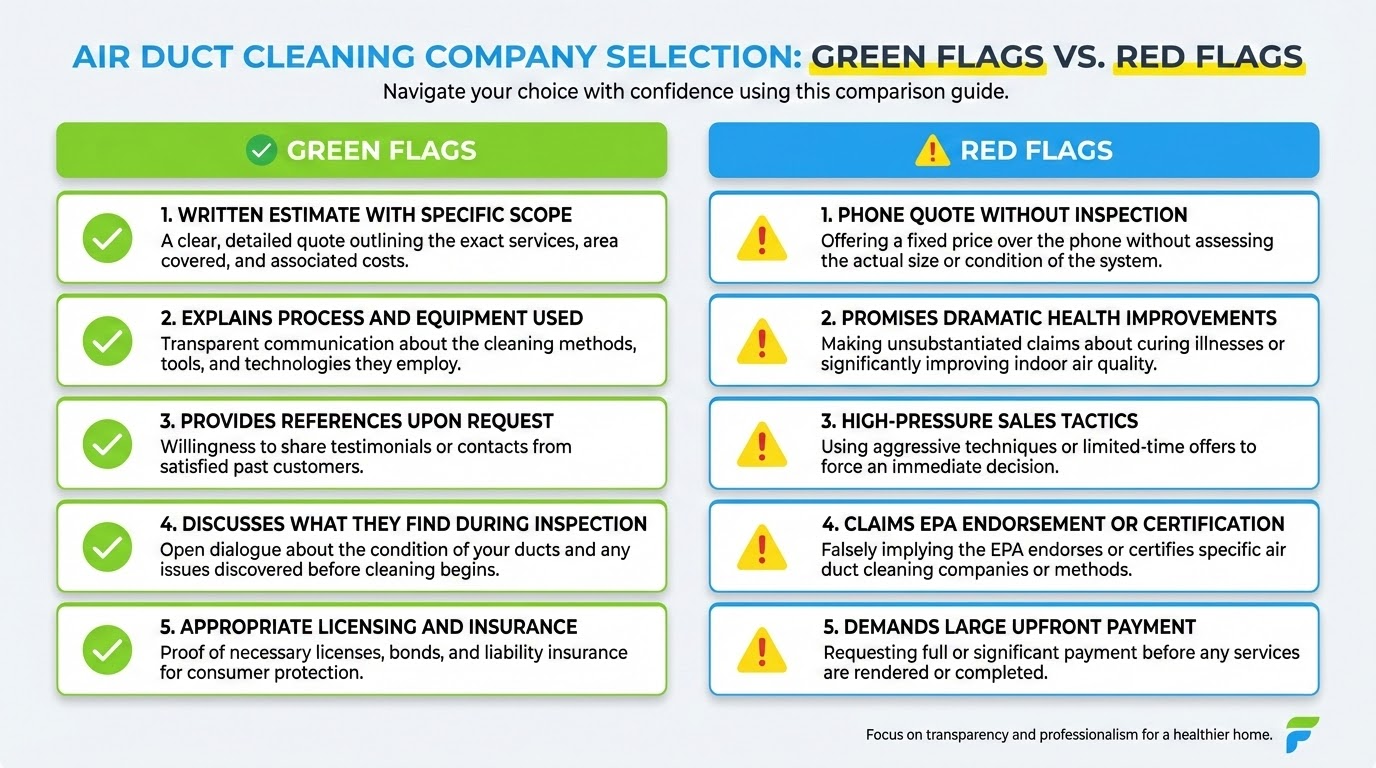
Selecting a qualified professional requires attention to several factors that distinguish legitimate service providers from those offering substandard work. The Houston market, like many urban areas, includes companies across the quality spectrum.
Request written estimates that clearly specify what services are included. A comprehensive estimate identifies the number of vents to be cleaned, whether supply and return ducts are both addressed, and what HVAC components beyond the ductwork receive attention. Vague estimates or reluctance to provide written documentation should prompt caution.
| Green Flag | Red Flag |
|---|---|
| Written estimate with specific scope | Phone quote without inspection |
| Explains process and equipment used | Promises dramatic health improvements |
| Provides references upon request | High-pressure sales tactics |
| Discusses what they find during inspection | Claims EPA endorsement or certification |
| Appropriate licensing and insurance | Demands large upfront payment |
Warning Signs of Contractor Scams
The Texas Department of Insurance provides guidance on recognizing contractor scams that applies directly to air duct cleaning services. Be wary of companies that demand substantial upfront payment, pressure you to make immediate decisions, or offer prices dramatically below market rates.
Some companies advertise extremely low prices for whole-house duct cleaning, then use the appointment as an opportunity to upsell unnecessary services or claim problems that require immediate, expensive treatment. A legitimate company provides transparent pricing based on the actual scope of work, not bait-and-switch tactics.
What About Health Claims from Duct Cleaning Companies?
Both the EPA and consumer reporting sources consistently note that air duct cleaning has not been proven to prevent health problems. Claims of dramatic health improvements from duct cleaning lack scientific support. Companies promising to cure allergies, eliminate respiratory problems, or provide significant health benefits through duct cleaning alone should be viewed skeptically.
This does not mean duct cleaning never provides value. When performed in response to specific contamination issues like mold, pest infestation, or excessive debris, professional cleaning addresses real problems. The distinction lies between addressing documented issues and making unsupported claims about general health benefits.
“Very responsive and professional. They got me on their schedule day after I called. The technicians were knowledgeable and took time to explain everything.”
Cost Considerations: What Influences Price
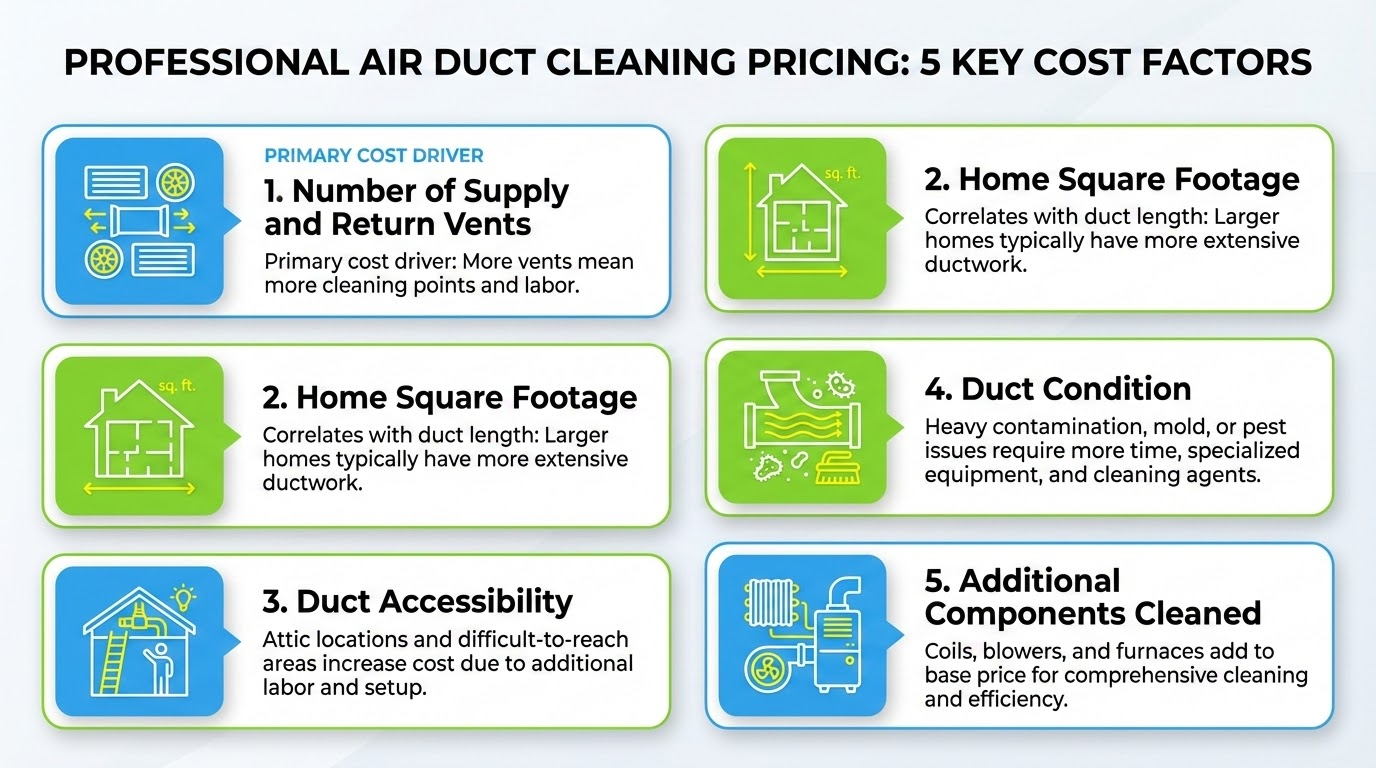
Professional duct cleaning costs vary based on several factors specific to each home. Understanding these variables helps homeowners evaluate whether quotes they receive fall within reasonable ranges and compare proposals appropriately.
Home size and the number of vents directly impact pricing, as larger systems require more time and equipment. Accessibility matters as well; ductwork in difficult-to-reach locations like attics or crawl spaces adds complexity. The type of ductwork, whether rigid metal or flexible material, affects both the cleaning approach and associated costs.
| Factor | Effect on Cost |
|---|---|
| Number of supply and return vents | Primary cost driver |
| Home square footage | Correlates with duct length |
| Duct accessibility | Attic locations increase cost |
| Duct condition | Heavy contamination requires more time |
| Additional components cleaned | Coils, blowers add to base price |
Beyond Duct Cleaning: Factors That Impact Indoor Air Quality More
For many Houston homeowners, focusing solely on duct cleaning misses more impactful opportunities to improve indoor air quality. Filtration, humidity control, and ventilation often provide greater benefits than duct cleaning alone, particularly in homes without specific contamination issues.
Regular filter replacement remains the most cost-effective strategy for maintaining air quality. High-quality filters capture particles before they enter the duct system, reducing accumulation and maintaining efficient airflow. For homes with allergy sufferers, upgrading to higher MERV-rated filters can provide noticeable improvement.
Houston’s Humidity Challenge
Humidity control plays a particularly important role in the Houston area. The connection between excess moisture, HVAC system problems, and mold growth has been well documented. Maintaining appropriate indoor humidity levels through proper HVAC operation and supplemental dehumidification where needed prevents conditions that lead to mold development in the first place.
A Practical Decision Framework
When deciding between DIY maintenance and professional cleaning, consider your specific situation rather than following generic advice. If your home has no visible contamination issues, no pest problems, no recent water damage, and no renovation dust in the system, routine filter changes and periodic vent cleaning may be entirely sufficient.
If you observe debris blowing from vents, notice musty odors when the system runs, have experienced flooding or water intrusion, or see visible mold or pest evidence, professional evaluation and cleaning becomes the appropriate response. Attempting DIY solutions in these circumstances risks incomplete resolution and potential system damage.
Clean Air Houston Pro approaches each situation with an inspection-first methodology that identifies actual needs rather than performing unnecessary services. This approach ensures homeowners receive appropriate solutions based on their specific circumstances, whether that means comprehensive cleaning or guidance that simpler maintenance will suffice.
Frequently Asked Questions
+
+
+
+
+
+
Get a professional assessment from Houston’s trusted indoor air quality experts. Honest recommendations, no pressure.
Flat Rates | No Hidden Fees | Same-Day Service Available
Making the right decision about air duct cleaning requires understanding your specific circumstances rather than relying on generic recommendations or pressure from service providers. Whether your situation calls for simple maintenance you can handle yourself or professional intervention for documented contamination, the key lies in accurate assessment of actual conditions.
If you have questions about your Houston home’s air duct system or want a professional evaluation of whether cleaning would provide genuine benefit, the team at Clean Air Houston Pro offers straightforward assessments without high-pressure sales tactics. Contact us to discuss your specific situation and receive honest guidance on the appropriate next steps for your home.

