
Reading Time: 5 minutes
Allergen Removal Houston TX: Complete Guide to Breathing Easier at Home
- Houston’s humidity (70-78%) creates ideal conditions for dust mites and mold growth year-round
- Maintaining indoor humidity below 50% is the most effective strategy for allergen control
- Weekly hot water washing of bedding at 130-140 degrees F eliminates dust mites
- HEPA filtration helps reduce airborne allergens but must be combined with surface cleaning
- Professional air duct cleaning removes accumulated allergens from your entire HVAC system
+
- Understanding Allergen Removal Houston TX
- The Hidden Threat: Common Allergens in Your Houston Home
- Why Allergies Feel Worse Inside Your Home
- Practical Steps for Effective Allergen Removal
- Your HVAC System’s Role in Allergen Control
- Addressing Mold: DIY vs Professional Help
- When to Seek Professional Allergen Removal Services
- Frequently Asked Questions
Understanding Allergen Removal Houston TX: A Comprehensive Guide
Living in Houston presents unique challenges when it comes to maintaining a healthy indoor environment. The combination of high humidity levels and warm temperatures creates ideal conditions for allergens to thrive inside your home. For residents dealing with persistent allergy symptoms, understanding effective allergen removal Houston TX strategies becomes essential for improving quality of life and breathing easier indoors.
Common allergens found in Houston homes include dust mites, mold spores, pet dander, and pollen particles that drift inside from outdoors. These microscopic irritants accumulate in bedding, carpets, upholstered furniture, and HVAC systems, contributing to symptoms that may feel worse at home than anywhere else.
The Hidden Threat: Common Allergens in Your Houston Home
Dust Mites: The Unseen Invaders
Dust mites are microscopic creatures that feed on dead skin cells shed by humans and pets. According to the US EPA, these organisms thrive in warm, humid environments, making Houston homes particularly susceptible to infestations. Unlike visible pests, dust mites cannot be seen with the naked eye, yet their presence affects millions of allergy sufferers.
Research from the National Institute of Environmental Health Sciences confirms that dust mites commonly inhabit mattresses, bedding, carpets, upholstered furniture, and curtains. These areas provide the warmth, humidity, and food sources that dust mites need to reproduce rapidly. Effective dust mite removal requires targeting these specific locations with appropriate allergen cleaning methods.
Mold Spores: A Humid Climate Challenge
Houston’s average monthly humidity ranges from approximately 70% to 78% according to climate data. This persistent moisture creates favorable conditions for mold growth throughout the year. Mold colonies release spores into the air, which can trigger allergic reactions and respiratory irritation when inhaled.
The US EPA explains that mold can produce allergens and irritants that affect sensitive individuals. Bathrooms, kitchens, laundry areas, and spaces near windows or pipes are common locations where mold develops in Houston homes. Addressing mold requires both removing existing growth and controlling the moisture that enables it to return.
Pet Dander and Pollen: Everyday Allergens
Households with cats, dogs, or other furry pets face additional allergen challenges. Pet dander consists of tiny skin flakes that become airborne and settle on surfaces throughout the home. These particles are lightweight and can remain suspended in the air for extended periods, making them easy to inhale.
Outdoor pollen presents another concern for Houston residents. During peak seasons, pollen grains enter homes through open doors, windows, and on clothing or shoes. Once inside, these particles accumulate on floors, furniture, and in HVAC systems, continuing to trigger symptoms long after outdoor exposure ends.
“They did a fantastic job. The Houston allergens and poor air quality in my home were problematic. Scheduling was easy, and the team was professional and thorough.”
Why Do Allergies Often Feel Worse Inside Your Own Home?
Many Houston residents notice their allergy symptoms intensify when they spend time indoors, particularly in the morning or in their bedroom. This phenomenon occurs because homes accumulate allergens over time, creating concentrated exposure in enclosed spaces. Unlike outdoor environments where air circulates freely, indoor allergens become trapped and recirculate through the home.
Bedrooms represent particular hotspots for allergen accumulation. The average person spends approximately one-third of their life in bed, surrounded by mattresses, pillows, and blankets that harbor dust mites and their waste products. Combined with Houston’s humidity levels that support allergen growth, bedrooms can become significant triggers for nighttime and morning symptoms.
Flat Rates | No Hidden Fees | Same-Day Service Available
Practical Steps for Effective Allergen Removal Houston TX
Humidity Control: Your First Line of Defense
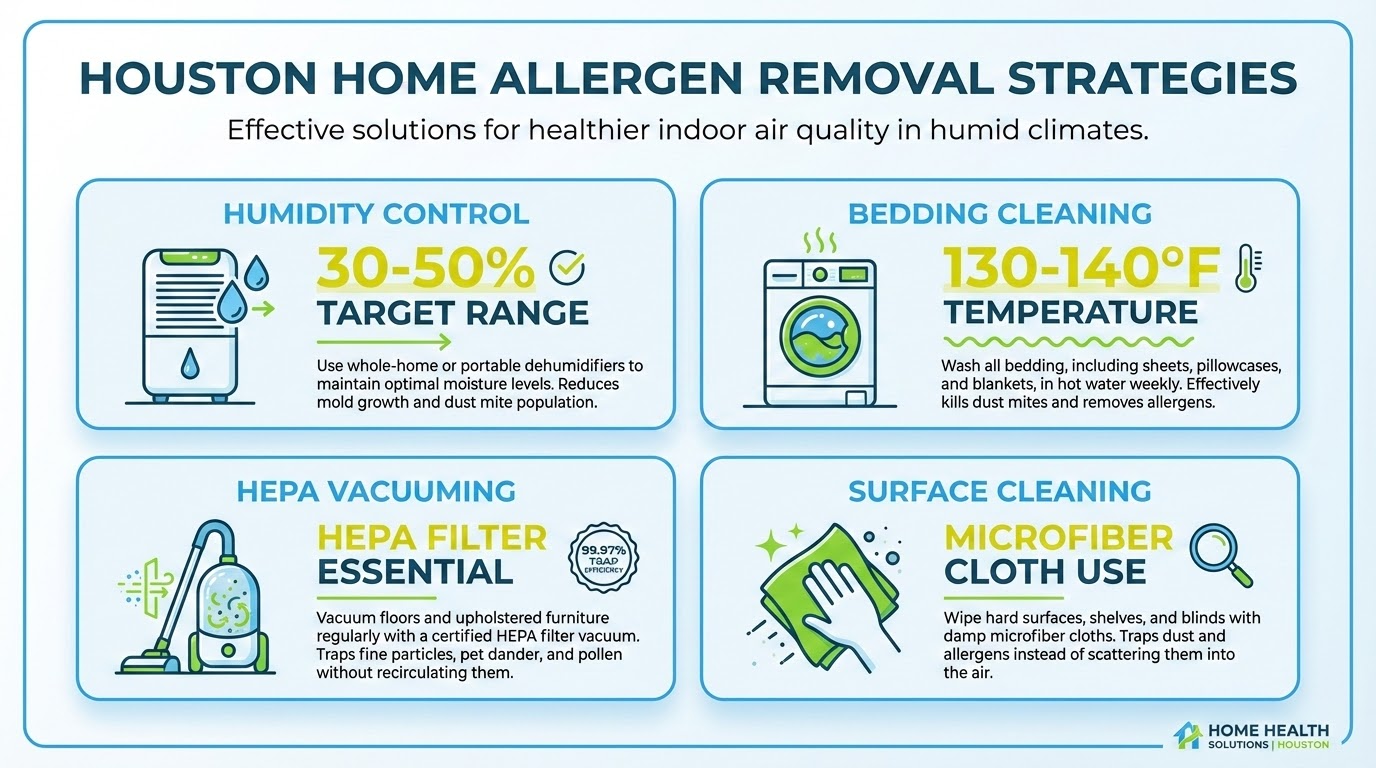
Controlling indoor humidity stands as the single most impactful step for reducing allergens in Houston homes. The US EPA recommends maintaining indoor humidity below 60%, with an ideal range of 30% to 50%. At these levels, dust mites struggle to survive and mold growth slows significantly. The CDC further emphasizes keeping humidity under 50% as a key strategy for controlling asthma triggers.
Investing in a quality dehumidifier and hygrometer allows you to monitor and maintain appropriate moisture levels throughout your home. Pay particular attention to bedrooms, bathrooms, and any areas prone to dampness. Running air conditioning consistently during humid months also helps remove excess moisture from indoor air.
| Humidity Level | Impact on Allergens | Recommended Action |
|---|---|---|
| Above 60% | Ideal conditions for dust mites and mold growth | Use dehumidifier immediately |
| 50-60% | Elevated risk for allergen proliferation | Increase ventilation and dehumidification |
| 30-50% | Optimal range that deters most allergens | Maintain current conditions |
| Below 30% | May cause respiratory dryness discomfort | Slightly reduce dehumidification |
Targeted Cleaning Practices for Allergy Relief
Bedding and Upholstery Cleaning: The National Institute of Environmental Health Sciences recommends washing all bedding weekly in hot water at temperatures between 130 degrees F and 140 degrees F. This temperature effectively eliminates dust mites and removes accumulated allergens. Research published in peer-reviewed journals confirms that weekly washing of bedding significantly reduces allergen levels and mite populations.
Allergen-proof covers for mattresses, pillows, and box springs create barriers that prevent dust mites from colonizing these items. Studies indicate these encasements represent one of the most effective strategies for managing dust mite allergens in sleeping areas. Combined with regular washing, protective covers substantially reduce nighttime allergen exposure.
Flooring and Surface Cleaning: Vacuuming with a HEPA-filtered vacuum cleaner captures fine particles that standard vacuums would recirculate into the air. Research demonstrates that HEPA vacuuming reduces dust mite allergen loads in carpets more effectively than conventional vacuuming methods. For best results, vacuum high-traffic areas and bedrooms at least twice weekly.
Does HEPA Filtration Actually Help With Allergies?
HEPA (High-Efficiency Particulate Air) filtration has become a popular tool for allergen control, but understanding its capabilities and limitations helps set realistic expectations. HEPA filters can capture 99.97% of particles as small as 0.3 microns, including many common allergens like pollen, pet dander, and dust mite waste products.
However, the US EPA notes that air cleaners and filters can reduce indoor air pollution but cannot remove all contaminants. Research on HEPA air purifiers shows they effectively reduce airborne allergen concentrations but may not significantly impact symptoms or settled dust on surfaces. This occurs because many allergens, particularly dust mite particles, spend most of their time on surfaces rather than floating in the air.
HEPA filtration provides the greatest benefit when used in rooms where you spend the most time, especially bedrooms. Combining air purification with thorough surface cleaning addresses allergens in both airborne and settled states. To further enhance your home’s air quality and reduce circulating allergens, consider investing in professional air duct cleaning to remove accumulated debris from your HVAC system.
“Stacy’s team was awesome fast and professional! They explained everything to me before they did anything. Very fair pricing. I will definitely use them again.”
What Role Does Your HVAC System Play in Allergen Control?
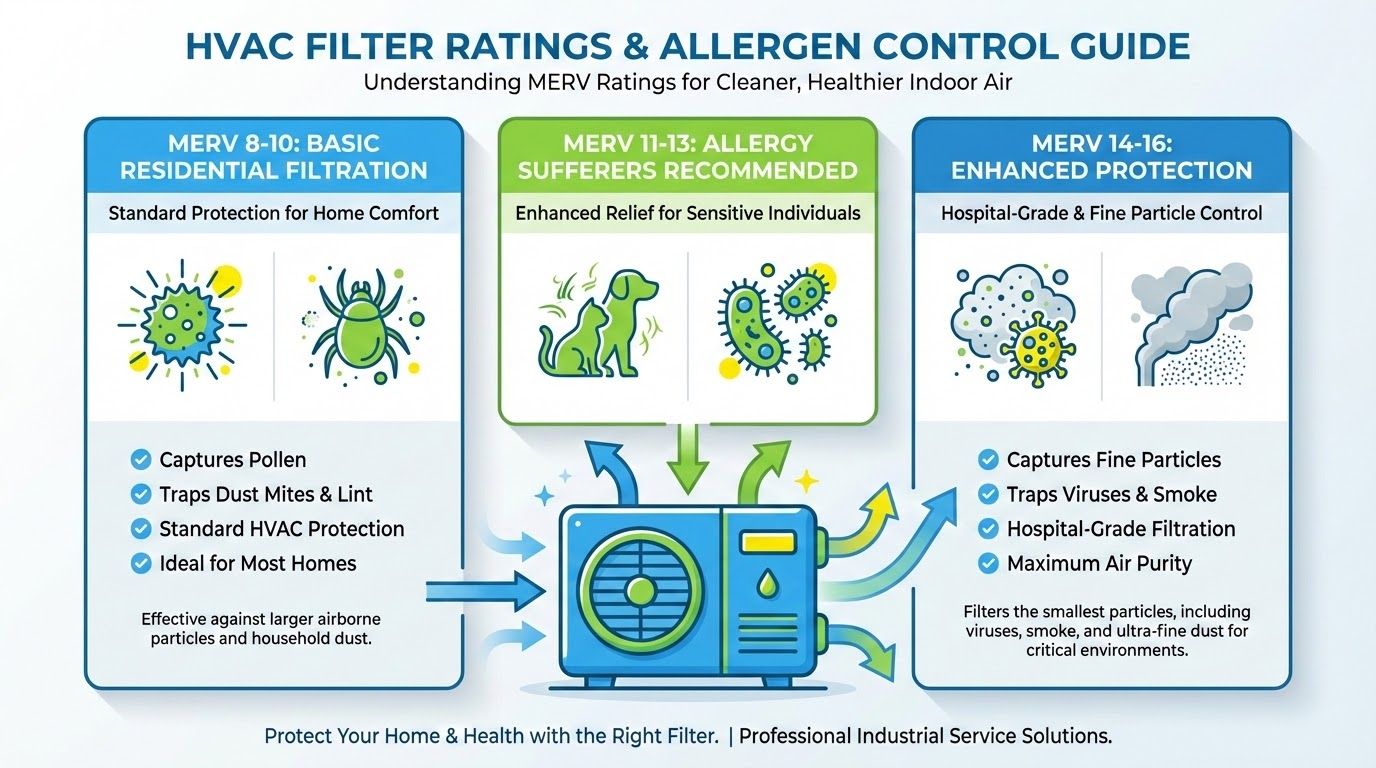
Your heating, ventilation, and air conditioning system circulates air throughout your entire home, making it either an ally or enemy in allergen control depending on maintenance and filtration. The US EPA recommends using filters rated MERV 13 or higher to effectively capture airborne allergens including mold spores, pollen, and fine dust particles.
Dirty air ducts accumulate dust, debris, pet dander, and potentially mold over time. Each time your system runs, it can distribute these accumulated allergens throughout your living spaces. Regular filter replacement every one to three months, combined with periodic professional duct cleaning, helps maintain cleaner air circulation.
| Filter Rating | Particles Captured | Best Application |
|---|---|---|
| MERV 8-10 | Pollen, dust mites, mold spores | Basic residential filtration |
| MERV 11-13 | Pet dander, fine dust, bacteria | Recommended for allergy sufferers |
| MERV 14-16 | Very fine particles, some viruses | Enhanced protection (verify system compatibility) |
How Often Should You Wash Bedding to Control Dust Mites?
Consistency matters significantly when washing bedding for allergen control. Weekly washing in hot water (130-140 degrees F) remains the gold standard recommendation from health authorities. This frequency prevents dust mite populations from reaching levels that trigger symptoms while removing accumulated allergens before they build up excessively.
Complete drying proves equally important as the washing process itself. Moisture left in bedding can actually promote mold growth and create conditions favorable to dust mites. Use the highest heat setting appropriate for your fabric type and ensure items are thoroughly dry before making the bed.
Professional air duct cleaning removes years of accumulated dust, pet dander, and allergens from your entire ventilation system.
Or call us: (832) 737-8500
Should You Remove Carpets If You Have Allergies?
Carpets and rugs represent significant reservoirs for allergens including dust mites, pet dander, pollen, and mold spores. Unlike hard flooring that allows easy cleaning, carpet fibers trap particles deep within their structure where standard vacuuming cannot fully reach them. For individuals with severe allergies, removing carpet from bedrooms often produces noticeable symptom improvement.
However, complete carpet removal is not always practical or necessary. If you prefer to keep carpeted areas, implementing aggressive maintenance routines can help manage allergen levels. This includes HEPA vacuuming at least twice weekly, professional deep cleaning every six to twelve months, and maintaining low indoor humidity to discourage dust mite survival.
Addressing Mold: When to Clean Yourself and When to Call Professionals
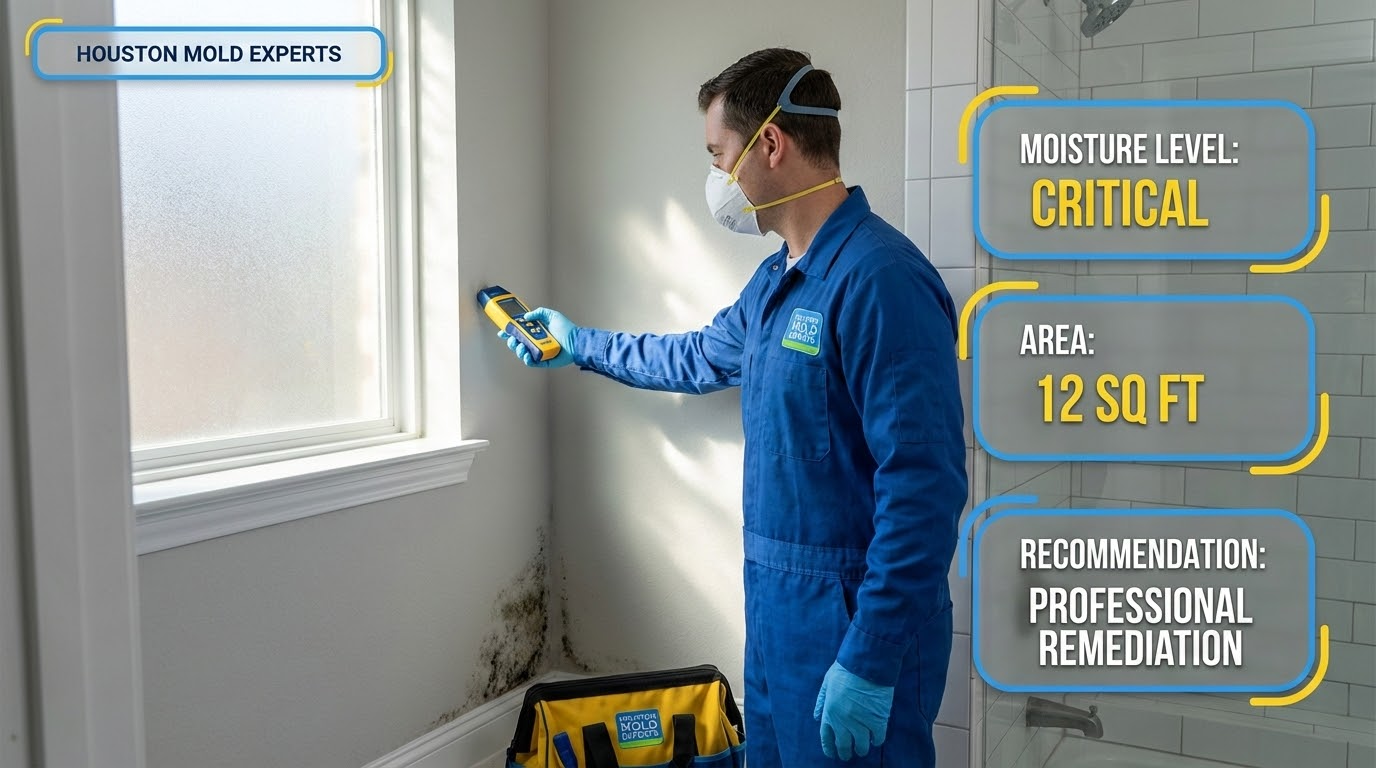
Small mold patches covering less than ten square feet can typically be addressed through careful DIY cleaning. The CDC recommends wearing an N95 respirator mask and gloves during mold cleanup to avoid inhaling spores or contacting mold directly. Never mix bleach with ammonia or other cleaners, as this creates dangerous toxic gases.
The US EPA emphasizes that controlling mold means controlling moisture. After cleaning visible mold, identify and repair the water source that enabled growth. This might include fixing leaky pipes, improving ventilation in bathrooms, or addressing condensation around windows. Materials should be dried thoroughly within 24 to 48 hours after any water intrusion.
Professional mold remediation becomes necessary when contamination covers large areas, when mold has infiltrated wall cavities or HVAC systems, or when occupants experience health effects despite cleaning efforts. Professionals have specialized equipment to contain spores during removal and can address hidden mold that DIY methods miss.
How Can You Reduce Pet Allergens Without Rehoming Your Pet?
For many families, pets are beloved members of the household, and rehoming is not a desirable option. Fortunately, several strategies can significantly reduce pet allergen exposure while allowing you to keep your furry companions. The key lies in creating allergen-reduced zones and maintaining consistent cleaning routines.
Designating bedrooms as pet-free areas provides allergen-free spaces for sleeping and recovery. Since bedrooms contain numerous soft surfaces that trap dander, keeping pets out prevents these areas from becoming concentrated allergen reservoirs. Close bedroom doors and use air purifiers to maintain cleaner air in these designated zones.
Frequent cleaning of surfaces where pet dander accumulates makes a substantial difference. This includes washing pet bedding weekly, vacuuming furniture and floors with HEPA filtration, and wiping down walls and hard surfaces where dander settles. Bathing pets regularly also reduces the amount of dander they shed into your environment.
When to Seek Professional Allergen Removal Services in Houston
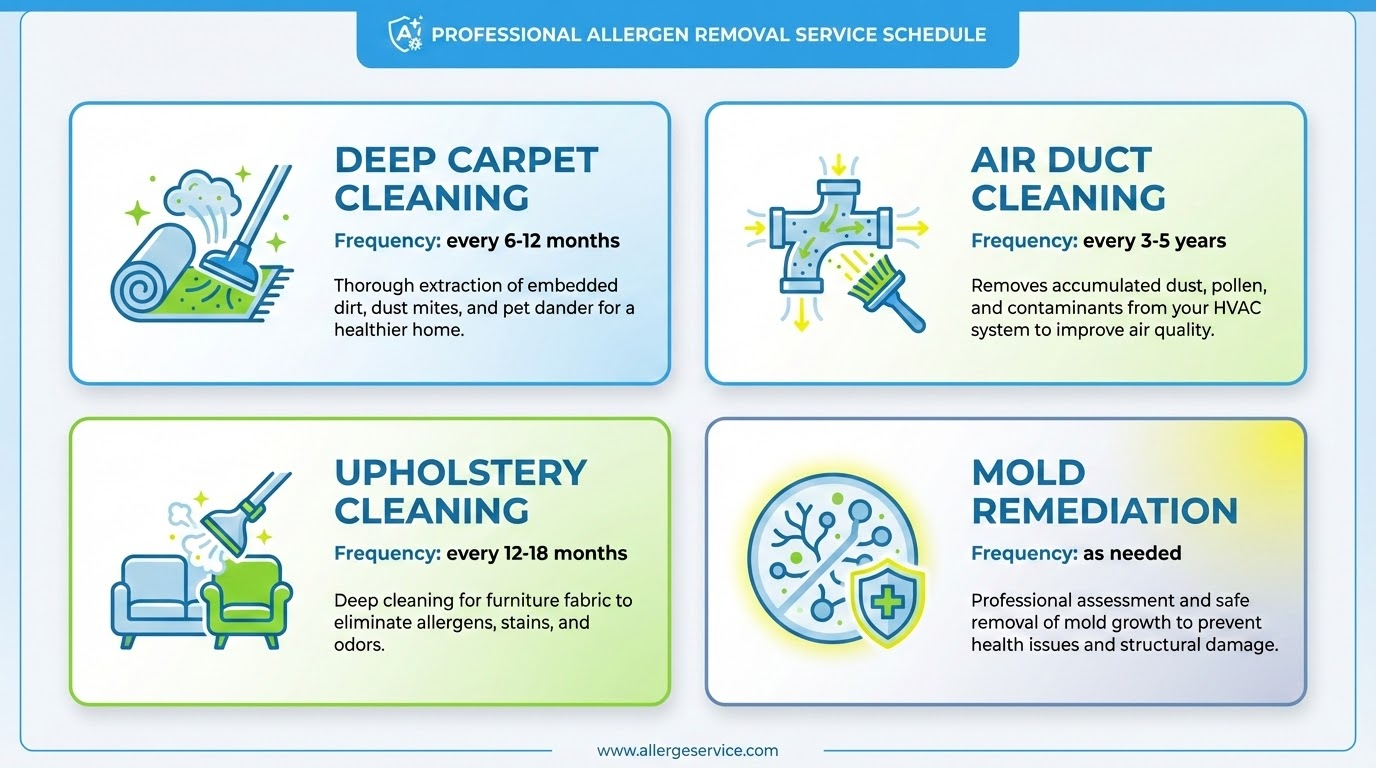
While consistent DIY maintenance forms the foundation of allergen control, professional services offer deeper cleaning capabilities and specialized solutions for persistent problems. Professional-grade equipment reaches allergen deposits that consumer products cannot effectively address, particularly in carpets, upholstery, and HVAC systems.
For persistent allergens embedded in your home, professional services like deep carpet cleaning can make a significant difference. Hot water extraction and specialized treatments penetrate carpet fibers to remove allergens that vacuuming leaves behind. Similarly, professional upholstery cleaning refreshes furniture that has accumulated years of dust mites, pet dander, and other particles.
Beyond basic filtration, professional air purification solutions can provide advanced protection against airborne allergens. These systems offer whole-home coverage and higher-efficiency filtration than portable units, addressing allergens at their source as air circulates through your HVAC system.
| Service Type | What It Addresses | Recommended Frequency |
|---|---|---|
| Deep Carpet Cleaning | Embedded dust mites, pet dander, tracked-in allergens | Every 6-12 months |
| Air Duct Cleaning | Accumulated dust, mold, debris in HVAC system | Every 3-5 years or as needed |
| Upholstery Cleaning | Allergens trapped in furniture fabric and cushions | Every 12-18 months |
| Mold Remediation | Existing mold colonies and contaminated materials | As needed when mold is discovered |
“Very responsive and professional. They got me on their schedule day after I called. The technicians were knowledgeable and took time to explain everything.”
Choosing the Right Allergen Removal Houston TX Professional
Selecting a qualified allergen removal service requires evaluating several factors beyond price alone. Look for companies with specific experience addressing allergen concerns rather than general cleaning services. Certifications from industry organizations indicate adherence to professional standards and ongoing training in current best practices.
Transparent pricing and clear explanations of the services included help avoid surprises and ensure you receive appropriate treatments. Reputable providers should be willing to discuss their methods, the equipment they use, and what results you can realistically expect. Be cautious of companies making absolute guarantees or promising complete allergen elimination, as ongoing maintenance will always be necessary.
Frequently Asked Questions
+
+
+
+
+
+
Join over 2,500 Houston families who trust Clean Air Houston Pro for their indoor air quality needs.
Flat Rates | No Hidden Fees | Same-Day Service Available

