
Reading Time: 5 minutes
Dryer Fire Prevention Houston: A Complete Safety Guide for Homeowners
- Lint accumulation causes 31% of all residential dryer fires according to the U.S. Fire Administration
- Houston’s high humidity accelerates lint buildup, requiring more frequent vent maintenance
- Professional dryer vent cleaning should be performed at least once annually to prevent fire hazards
- Warning signs include extended drying times, burning smells, and clothes that are extremely hot after cycles
- Replacing accordion-style ducts with rigid metal alternatives significantly reduces fire risk
+
- Understanding the Hidden Danger: Dryer Fires in Houston Homes
- How Does Lint Transform Into a Fire Hazard?
- Warning Signs of a Dangerous Dryer Vent Blockage
- Essential Steps for Dryer Fire Prevention
- What Makes Some Vent Materials Safer Than Others?
- Everyday Habits That Affect Fire Risk
- How Often Should You Schedule Professional Vent Cleaning?
- DIY vs Professional Dryer Vent Cleaning
- Creating a Year-Round Dryer Safety Routine
- Frequently Asked Questions
Every year, thousands of residential fires across the United States originate from a seemingly harmless household appliance: the clothes dryer. For Houston homeowners, understanding the risks associated with dryer operation and implementing effective prevention strategies is essential for protecting your family and property. This comprehensive guide explores the science behind dryer fires, identifies warning signs of potential hazards, and provides actionable steps to maintain a safe laundry environment in your home.
Understanding the Hidden Danger: Dryer Fires in Houston Homes
Dryer fires represent one of the most preventable yet frequently occurring household fire hazards. According to the U.S. Fire Administration, failure to clean dryers and their exhaust systems accounted for 31 percent of all dryer fire incidents between 2018 and 2020. This statistic reveals a troubling reality: most dryer fires result from simple maintenance oversights that homeowners can easily address with proper knowledge and routine care.
The primary culprit behind these fires is lint accumulation. As clothes tumble and dry, tiny fabric fibers separate and travel through the dryer system. While the lint screen captures a significant portion of these fibers, substantial amounts escape into the exhaust duct and beyond. Over time, this accumulated lint creates a serious fire hazard that many homeowners unknowingly harbor in their laundry rooms.
Why Dryer Vent Safety is Crucial for Houston Residents
Houston’s climate presents unique challenges for dryer vent maintenance. High humidity levels can cause lint to clump and adhere more stubbornly to duct surfaces. Additionally, the region’s heat means dryers often work harder to remove moisture from clothes, generating more lint in the process. These factors combine to accelerate lint buildup and increase fire risk for local homeowners.
Professional services like Clean Air Houston Pro specialize in addressing these regional concerns, offering thorough dryer vent cleaning and inspection services tailored to Houston’s specific conditions. Regular maintenance becomes even more critical when environmental factors accelerate the accumulation of combustible materials within your dryer system.
“They did a fantastic job. The Houston allergens and poor air quality in my home were problematic. Scheduling was easy, and the team was professional and thorough.”
How Does Lint Transform from Fabric Waste into a Fire Hazard?
Understanding the mechanism behind dryer fires empowers homeowners to recognize and address potential dangers before they escalate. Lint possesses several characteristics that make it particularly dangerous in a dryer environment. These lightweight fibers are extremely dry, loosely packed, and highly flammable. When exposed to sufficient heat and a spark or ignition source, lint can catch fire almost instantaneously.
The fire hazard develops progressively as lint accumulates within the dryer drum, lint trap housing, exhaust duct, and exterior vent. Each location presents its own risks and requires specific attention during maintenance routines.
The Role of Lint Buildup in Overheating
When lint obstructs the exhaust pathway, hot air cannot escape efficiently from the dryer. This restriction forces the heating element to work continuously, raising internal temperatures far beyond normal operating levels. The Consumer Product Safety Commission confirms that this overheating cycle creates conditions where accumulated lint can ignite, potentially starting a fire within the dryer or exhaust system.
The progression typically follows a predictable pattern. Reduced airflow leads to longer drying times, which generates additional heat and more lint. This cycle continues until temperatures reach critical levels or until homeowners notice warning signs and take corrective action.
What Are the Warning Signs of a Dangerous Dryer Vent Blockage?
Recognizing the early indicators of vent obstruction allows homeowners to address problems before they become dangerous. Several distinct warning signs suggest your dryer vent requires immediate attention and cleaning.
| Warning Sign | Possible Cause | Recommended Action |
|---|---|---|
| Extended drying times | Restricted airflow through clogged vent | Inspect and clean entire vent system |
| Clothes extremely hot after cycle | Heat not exhausting properly | Check vent connections and exterior opening |
| Burning smell during operation | Lint overheating or igniting | Stop dryer immediately and inspect system |
| Visible lint around dryer or vent | Loose connections or duct damage | Repair connections and clean surrounding area |
| Dryer exterior feels unusually hot | Internal heat not venting correctly | Professional inspection recommended |
| Exterior vent flap not opening | Blockage at vent termination point | Clear debris and ensure proper operation |
Any of these symptoms warrants immediate investigation. Continuing to operate a dryer with restricted venting dramatically increases fire risk and can cause permanent damage to the appliance itself.
Notice any of these warning signs? Same-day dryer vent inspection available for Houston homeowners. Limited appointments remain this week.
Flat Rates | No Hidden Fees | Same-Day Service Available
Essential Steps for Dryer Fire Prevention Houston Homeowners Can Take
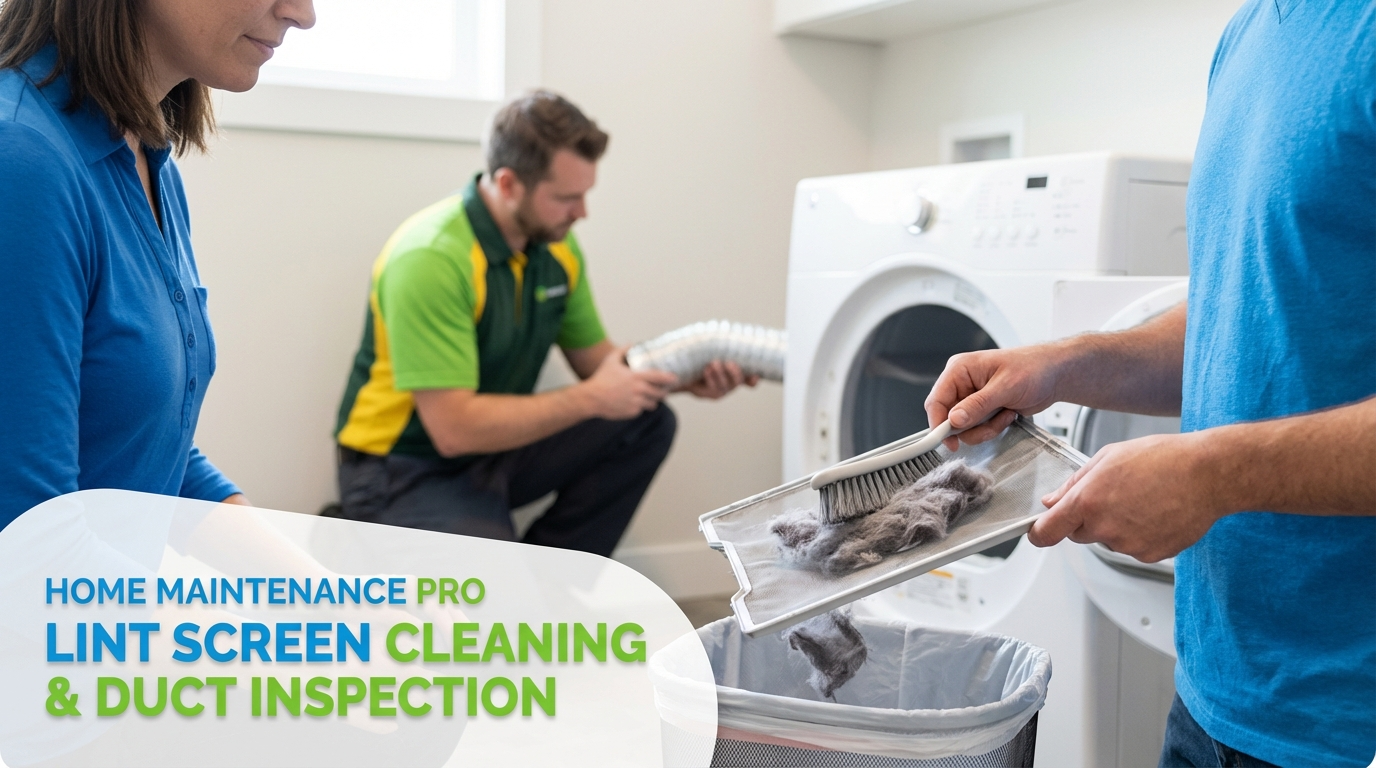
Effective fire prevention requires a multi-layered approach combining daily habits, periodic inspections, and professional maintenance. Each component plays a vital role in maintaining a safe dryer system throughout the year.
Regular Cleaning: Your First Line of Defense
The most fundamental prevention measure involves cleaning the lint screen before or after every single load of laundry. This simple habit takes only seconds but significantly reduces the amount of lint entering your exhaust system. The U.S. Fire Administration emphasizes this practice as essential for preventing dryer fires in residential settings.
Beyond the lint screen, homeowners should periodically clean the area behind and beneath the dryer. Lint and dust accumulate in these spaces and present additional fire hazards, particularly because they remain near heat-generating components. The flexible transition duct connecting your dryer to the wall vent also requires regular inspection and cleaning, as this section often develops kinks or damage that trap lint.
Professional Dryer Vent Cleaning: An Annual Necessity
While homeowner maintenance addresses accessible areas, professional cleaning reaches sections of the exhaust system that DIY methods cannot effectively clean. The U.S. Fire Administration recommends cleaning dryer vent ductwork at least once per year to remove accumulated lint throughout the entire system.
Professional technicians from services like Clean Air Houston Pro utilize specialized rotating brushes and high-powered vacuum equipment designed specifically for dryer vent systems. These tools navigate the full length of exhaust ducts, including turns and vertical sections, removing compacted lint that poses significant fire risks. Following professional cleaning, homeowners typically notice improved dryer performance, shorter drying cycles, and reduced energy consumption.
“Stacy’s team was awesome fast and professional! They explained everything to me before they did anything. Very fair pricing. I will definitely use them again.”
What Makes Some Vent Materials Safer Than Others?
The type of ductwork connecting your dryer to the exterior vent significantly impacts both safety and performance. Not all vent materials provide equal protection against fire hazards, and upgrading to safer options represents one of the most effective prevention measures homeowners can implement.
The Consumer Product Safety Commission specifically recommends replacing plastic or foil accordion-style ducting with rigid or semi-rigid metal alternatives. Accordion-style ducts, while flexible and easy to install, present several serious disadvantages. Their ribbed interior surfaces trap lint far more readily than smooth metal surfaces. Additionally, these flexible ducts sag and kink easily, creating pockets where lint accumulates and restricting airflow throughout the system.
| Duct Material | Fire Safety Rating | Lint Accumulation | Recommendation |
|---|---|---|---|
| Rigid aluminum or steel | Excellent | Minimal | Preferred for all installations |
| Semi-rigid aluminum | Good | Low | Acceptable for short runs |
| Foil accordion-style | Poor | High | Replace immediately |
| Plastic or vinyl | Very poor | High | Replace immediately |
Inspecting and Maintaining Your Dryer Vent System
Regular inspection of your complete vent system helps identify problems before they become dangerous. Start by checking the exterior vent opening while your dryer operates. You should feel strong airflow and observe the vent flap opening freely. Weak airflow or a flap that remains partially closed indicates blockage requiring attention.
Examine all visible connections for security and proper sealing. Loose connections allow lint to escape into wall cavities or living spaces, creating hidden fire hazards. For gas dryers, vent integrity becomes even more critical because improper venting can allow carbon monoxide to accumulate in your home.
Our technicians can inspect your current setup and recommend safer alternatives if needed. Free estimates on vent upgrades.
Or call us: (832) 737-8500
Which Everyday Habits Increase or Decrease Fire Risk?

Daily laundry practices significantly impact your overall fire risk. Some common habits inadvertently increase danger, while simple adjustments can substantially improve safety.
Overloading the dryer restricts airflow within the drum and generates excessive lint. Running appropriately sized loads allows clothes to tumble freely, drying more efficiently with less strain on the system. Similarly, operating the dryer when leaving home or going to sleep eliminates the opportunity to respond quickly if problems develop. Staying home and periodically checking on the dryer during operation provides an important safety margin.
Certain items require special handling before machine drying. Fabrics contaminated with flammable substances such as cooking oil, gasoline, cleaning solvents, or cosmetics present extreme fire risks. The Consumer Product Safety Commission has documented cases where oil-soiled rags and towels spontaneously ignited during or after drying cycles. These items should air dry completely outdoors before any contact with heat sources.
Smart Drying Habits for Enhanced Safety
Establishing consistent safety practices protects your household from preventable fires. Keep the area surrounding your dryer completely clear of combustible materials including clothing, cleaning supplies, cardboard boxes, and paper products. Install a smoke detector in or near your laundry area and test it monthly to ensure proper function.
For households with multiple family members or renters, clearly communicate dryer safety expectations. Post simple reminders near the dryer about cleaning the lint screen and reporting any unusual odors, sounds, or extended drying times. Creating shared responsibility for dryer maintenance ensures consistent attention to safety regardless of who performs laundry duties.
How Often Should Houston Homeowners Schedule Professional Vent Cleaning?
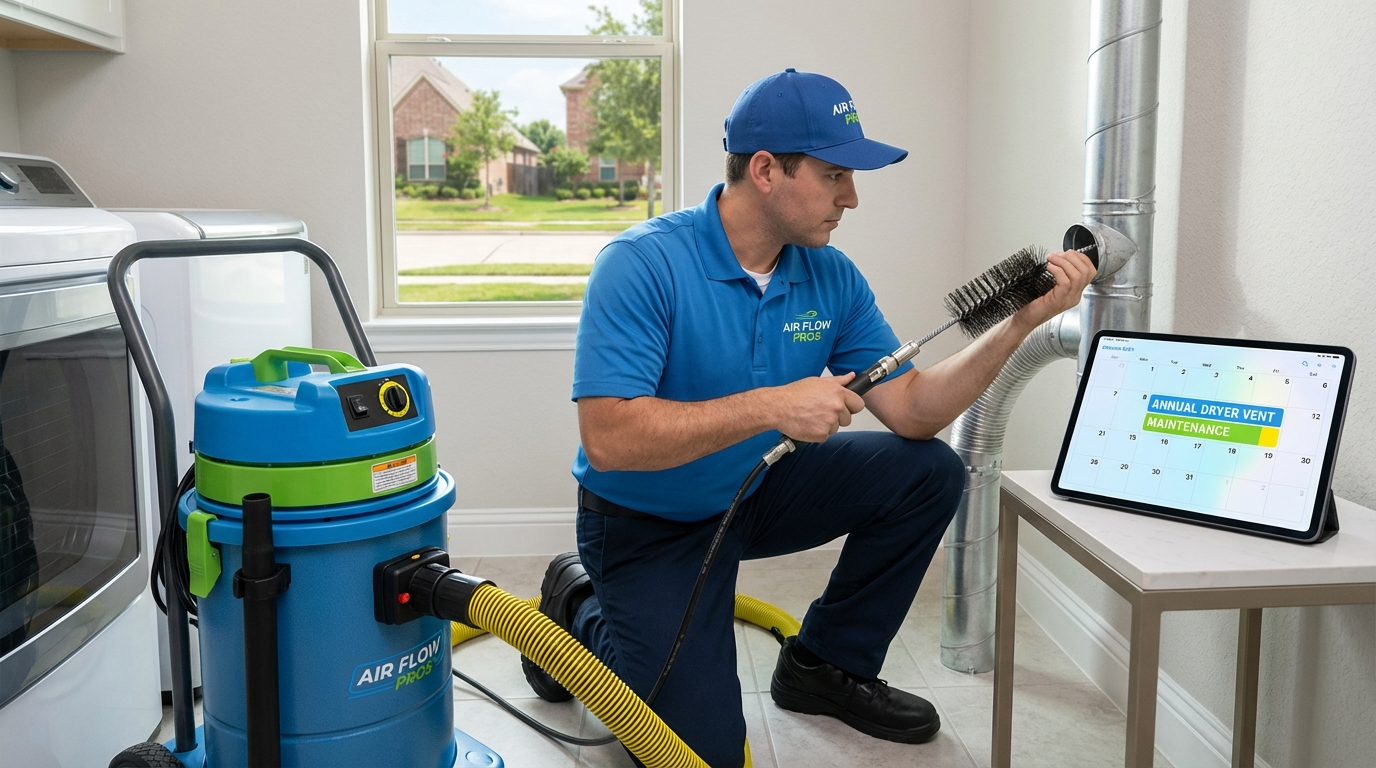
The minimum recommended frequency for professional dryer vent cleaning is once annually. However, several factors specific to your household may indicate need for more frequent service.
High-volume households running multiple loads daily generate significantly more lint than average households. Families with pets face additional challenges because pet hair contributes substantially to lint accumulation. Homes with long vent runs, particularly those routing through walls or ceilings before reaching exterior openings, accumulate lint more rapidly in hard-to-reach sections.
The Texas Department of Insurance recommends cleaning lint from vent pipes every three months for optimal safety, particularly in climates where dryers work hard year-round. Houston’s humidity and heat create exactly these demanding conditions.
Clean Air Houston Pro offers comprehensive vent inspection and cleaning services that address the specific challenges facing local homeowners. Professional evaluation can determine appropriate cleaning frequency based on your household’s unique circumstances and vent system configuration.
“Very responsive and professional. They got me on their schedule day after I called. The technicians were knowledgeable and took time to explain everything.”
Can You Safely Clean Your Dryer Vent Yourself, or Do You Need a Professional?
Homeowners can perform basic maintenance that supplements but does not replace professional cleaning. Understanding the limitations of DIY approaches helps you make informed decisions about when professional service becomes necessary.
DIY vent cleaning works reasonably well for short, accessible vent runs with minimal turns. Simple brush kits available at hardware stores can remove loose lint from the first several feet of ductwork. However, these tools rarely reach the full length of typical residential vent systems, which may extend twenty feet or more before reaching the exterior.
Professional cleaning becomes essential when you notice warning signs of blockage despite regular DIY maintenance. Long vent runs, vents terminating on roofs or in difficult-to-access locations, and systems with multiple turns all accumulate lint in areas beyond homeowner reach. Additionally, any history of burning smells or operational problems warrants professional evaluation to ensure complete cleaning and identify potential damage.
Why Is Venting a Dryer Into an Attic or Garage Dangerous?
Some homes feature dryer installations that exhaust into attics, garages, crawl spaces, or other interior areas rather than directly outdoors. This configuration creates serious hazards that homeowners must understand and address.
Dryer exhaust carries substantial moisture along with lint and hot air. When released into enclosed spaces, this moisture promotes mold growth and can damage building materials over time. More immediately concerning, lint dispersed into attics or crawl spaces accumulates on surfaces throughout the area, including near electrical wiring, insulation, and other potential ignition sources.
Interior venting also traps heat within the building envelope, increasing cooling costs and creating uncomfortable conditions. For gas dryers, the hazards multiply because exhaust also contains combustion byproducts including carbon monoxide, which can accumulate to dangerous levels in enclosed spaces.
Proper dryer venting always terminates at an exterior wall or roof opening with a functional damper that opens during operation and closes when the dryer stops. If your current installation exhausts into any interior space, prioritize correction of this dangerous configuration.
Creating a Year-Round Dryer Safety Routine for Your Household
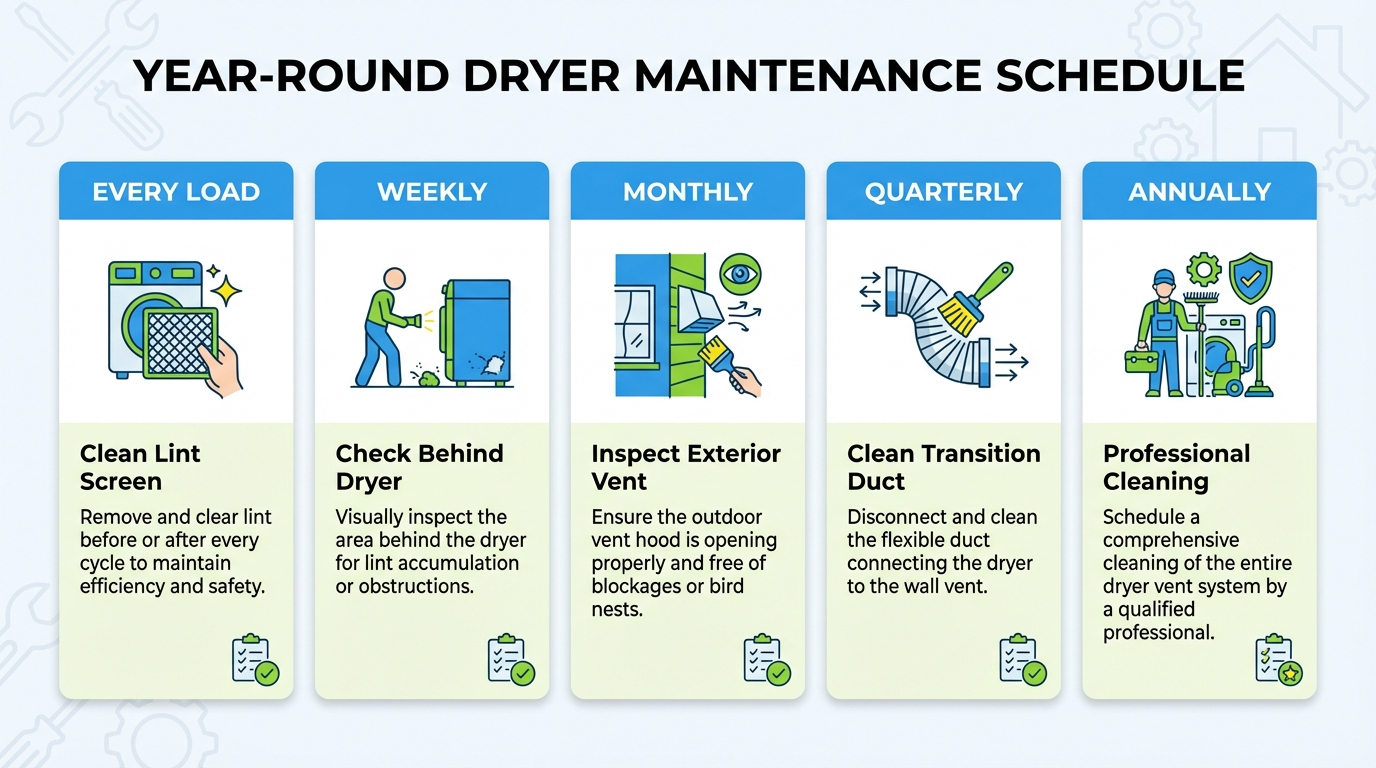
Establishing consistent maintenance habits throughout the year ensures ongoing protection against dryer fires. A structured approach distributes tasks appropriately and prevents important maintenance from being overlooked.
| Frequency | Maintenance Task | Responsible Party |
|---|---|---|
| Every load | Clean lint screen | Whoever runs the dryer |
| Weekly | Check behind and beneath dryer for lint | Household member |
| Monthly | Inspect exterior vent for obstructions | Household member |
| Quarterly | Clean lint from transition duct area | Household member |
| Annually | Professional vent system cleaning and inspection | Professional service |
For renters and apartment residents, documenting maintenance requests and reporting warning signs promptly protects both safety and legal interests. Landlords bear responsibility for maintaining safe appliance installations, but tenants must communicate problems to enable appropriate response.
Houston Fire Season Alert: With increased dryer usage during cooler months, now is the ideal time to schedule your annual vent cleaning before appointment slots fill up.
Frequently Asked Questions
+
+
+
+
+
+
Join over 2,500 Houston homeowners who trust Clean Air Houston Pro for their dryer vent safety.
Flat Rates | No Hidden Fees | Same-Day Service Available

