
Reading Time: 5 minutes
Indoor Air Quality Houston: Why Your Home’s Air Matters More Than You Think
- Houston’s high humidity creates ideal conditions for mold growth and dust mite proliferation year-round
- Indoor air can contain 2-5 times more pollutants than outdoor air according to EPA research
- Professional IAQ testing in Houston typically costs between $292-$584 depending on scope
- Mold can begin growing within 24-48 hours after water damage occurs
- Maintaining indoor humidity below 60% is critical for preventing biological contaminants in Houston homes
+
- What Causes Indoor Air Pollution in Houston Homes
- How Houston’s Climate Creates Perfect Conditions for IAQ Problems
- Symptoms That Indicate Your Indoor Air Quality Needs Attention
- Why Mold Is a Significant Concern for Houston Homeowners
- What Professional IAQ Testing Actually Measures
- Indoor Air Quality Testing Costs in Houston
- Practical Steps to Improve IAQ Without Major Investment
- When to Call a Professional
- How Clean Air Houston Pro Addresses Your IAQ Needs
- Frequently Asked Questions
Houston residents face a unique challenge when it comes to indoor air quality. The combination of high humidity, subtropical climate, and urban pollution creates conditions that can significantly impact the air inside your home. Poor indoor air quality affects everything from your daily comfort to long-term health outcomes, making IAQ a critical concern for every household in the Greater Houston area.
Understanding what contributes to indoor pollution and how to address it empowers you to create a healthier living environment. Whether you experience unexplained allergies, notice musty odors, or simply want peace of mind about the air your family breathes, this guide covers the essential information you need. Clean Air Houston Pro specializes in helping Houston residents identify and resolve indoor air quality issues through professional assessment and targeted solutions.
What Exactly Causes Indoor Air Pollution in Houston Homes?
Indoor pollution originates from multiple sources that often go unnoticed. Building materials and furnishings release chemicals over time, while everyday activities like cooking and cleaning introduce particles and compounds into your air. HVAC systems, when poorly maintained, can circulate contaminants throughout your entire home rather than filtering them out.
Houston’s climate adds another layer of complexity. The high humidity encourages mold growth and dust mite proliferation, while outdoor pollutants infiltrate homes through windows, doors, and ventilation systems. Understanding these sources helps you take targeted action rather than guessing at solutions.
Common Indoor Pollutants You Should Know About
According to the U.S. Environmental Protection Agency, common indoor pollutants include volatile organic compounds, particulate matter, carbon monoxide, radon, and biological contaminants like mold spores. Each pollutant type has distinct sources and health implications that require different approaches to mitigation.
Volatile organic compounds deserve special attention because they appear in so many household products. VOCs are chemicals that evaporate at room temperature, releasing gases from paints, adhesives, cleaning supplies, and new furniture. The EPA notes that indoor VOC concentrations often measure two to five times higher than outdoor levels, sometimes reaching ten times higher during activities like painting or stripping finishes.
Particulate matter enters homes from outdoor sources and indoor activities alike. Cooking, burning candles, using fireplaces, and even vacuuming with older equipment can elevate particle levels. These microscopic particles penetrate deep into respiratory systems, causing both immediate irritation and potential long-term health effects. Beyond managing temperature, a well-maintained HVAC system is crucial for filtering out many indoor pollutants. For a full range of comprehensive HVAC services, explore how professional maintenance can improve your indoor air.
How Does Houston’s Climate Create Perfect Conditions for Indoor Air Problems?
Houston’s subtropical humidity creates an environment where moisture-related issues thrive. When outdoor humidity regularly exceeds 70-80%, keeping indoor levels in the recommended range of 30-60% becomes challenging without proper equipment and maintenance. This persistent moisture encourages biological growth that directly impacts air quality.
The heat also plays a role. Houston homes rely heavily on air conditioning, which means windows stay closed for months at a time. While this keeps outdoor heat and humidity at bay, it also traps indoor pollutants that would otherwise dissipate. Tightly sealed modern homes, while energy efficient, can exacerbate this trapped air effect.
“They did a fantastic job. The Houston allergens and poor air quality in my home were problematic. Scheduling was easy, and the team was professional and thorough.”
What Symptoms Indicate Your Indoor Air Quality Needs Attention?
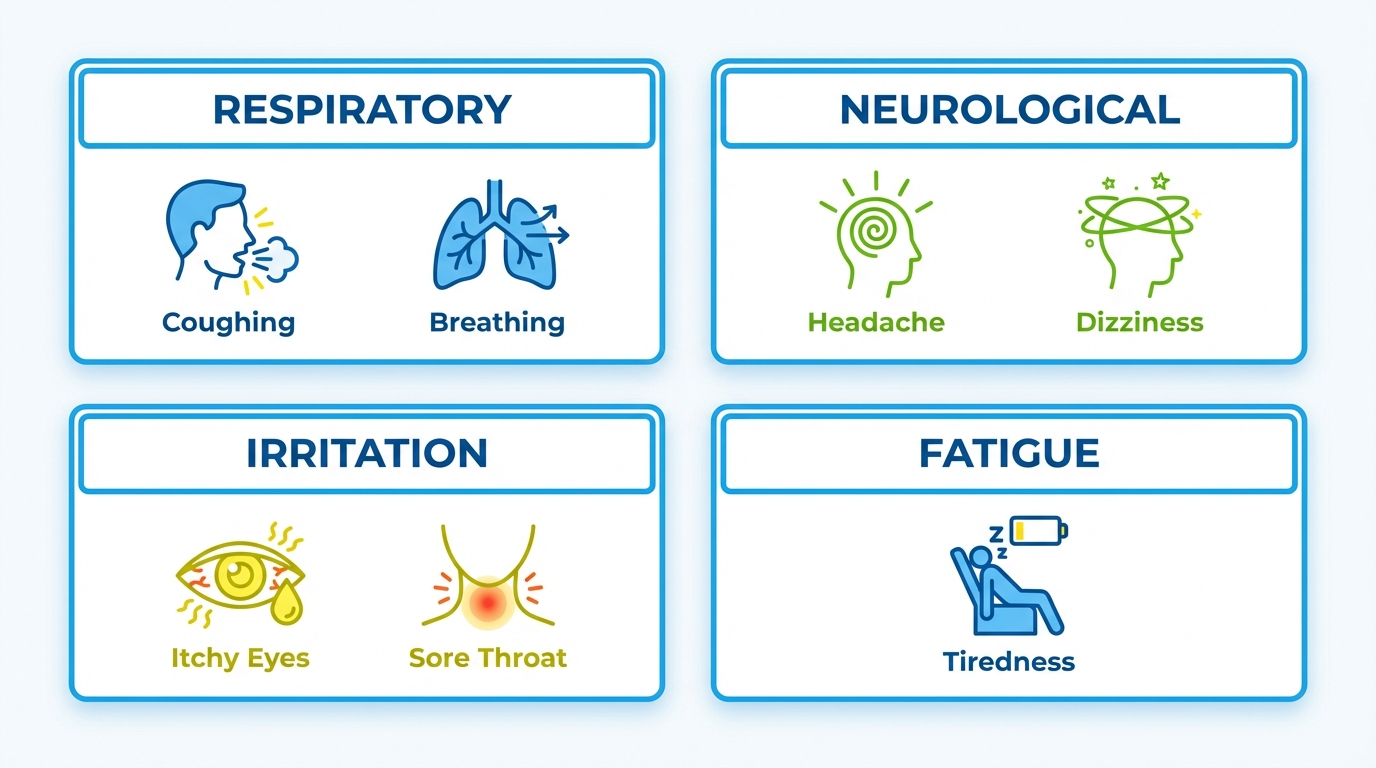
Your body often signals poor indoor air quality before any visible signs appear. Short-term symptoms include eye, nose, and throat irritation, headaches, dizziness, and unusual fatigue. These symptoms may seem minor individually but become concerning when they consistently occur at home and improve when you leave.
People with pre-existing conditions experience more severe reactions. Asthma sufferers may notice increased attacks or difficulty controlling symptoms. Allergy sufferers find their reactions persist even outside typical allergy seasons. Children, elderly individuals, and those with compromised immune systems remain particularly vulnerable to indoor air quality issues.
| Symptom Category | Common Signs | Potential IAQ Cause |
|---|---|---|
| Respiratory | Coughing, wheezing, shortness of breath | Particulate matter, mold spores, dust |
| Neurological | Headaches, dizziness, difficulty concentrating | VOCs, carbon monoxide, inadequate ventilation |
| Irritation | Itchy eyes, runny nose, sore throat | Allergens, chemical irritants, dry air |
| Fatigue | Unusual tiredness, sluggishness at home | Poor ventilation, elevated CO2, multiple pollutants |
Our certified technicians can identify exactly what pollutants affect your Houston home and recommend targeted solutions.
Or call us: (832) 737-8500
Why Is Mold Such a Significant Concern for Houston Indoor Air Quality?
Mold thrives in Houston’s humid environment, making it one of the most common indoor air quality concerns in the region. Mold spores exist everywhere in the outdoor environment, but problems arise when moisture conditions indoors allow these spores to colonize and grow. Once established, mold releases additional spores into your air, creating ongoing exposure.
The relationship between moisture and mold is direct and predictable. Any water intrusion—whether from flooding, leaks, or condensation—creates conditions for mold growth within 24-48 hours. Houston’s frequent severe weather events, combined with aging infrastructure and high baseline humidity, mean that many homes experience the moisture conditions that enable mold at some point.
Identifying and Addressing Mold in Your Home
When visible mold is present, the EPA indicates that formal testing is often unnecessary. There are no federal limits for mold spore counts, so sampling cannot determine compliance with any standard. The presence of visible mold tells you everything you need to know: you have a moisture problem that requires attention.
Addressing mold effectively requires focusing on the moisture source rather than just the visible growth. Removing mold without fixing the underlying water issue results in regrowth. The CDC recommends cleaning and drying water-damaged areas within 48-72 hours to prevent mold establishment. For small areas, safety-focused cleanup using gloves, masks, and proper drying techniques can be effective. However, simply painting or caulking over mold without addressing moisture and performing proper cleaning leads to continued problems beneath the surface.
Texas Regulations for Mold Remediation
Texas law requires licensing for mold assessment and remediation work, with oversight from the Texas Department of Licensing and Regulation. This licensing requirement protects consumers from unqualified contractors and ensures that remediation follows established protocols.
An important exemption exists for small areas. Property owners and maintenance staff may clean mold covering less than 25 contiguous square feet without licensing requirements. This allows homeowners to address minor issues themselves while directing larger problems to qualified professionals. For issues exceeding the 25 square foot threshold or for peace of mind, engaging professional mold removal services is highly recommended to ensure compliance and effective remediation.
“Stacy’s team was awesome fast and professional! They explained everything to me before they did anything. Very fair pricing. I will definitely use them again.”
What Does Professional IAQ Testing Actually Measure?
Professional air quality assessment goes far beyond simple observation. Testing can measure specific pollutant concentrations, humidity levels, ventilation rates, and the presence of biological contaminants. This data-driven approach identifies exactly what issues exist and their severity, enabling targeted solutions rather than guesswork.
Common measurements include particulate matter counts at various sizes, VOC levels, carbon dioxide concentrations as a ventilation indicator, temperature and humidity readings, and sampling for mold spores or other biological materials. Some assessments also evaluate HVAC system performance, ductwork condition, and potential pollutant sources throughout the home.
The Importance of Professional IAQ Testing
Professional testing provides information that symptoms and visual inspection cannot reveal. Many pollutants are invisible and odorless at concentrations that still affect health. Testing identifies these hidden issues before they cause significant problems or require extensive remediation.
An air quality assessment also establishes baseline measurements that can be compared over time. After implementing improvements, follow-up testing confirms whether solutions achieved their intended effects. This verification prevents wasted investment in ineffective measures and provides documentation for insurance or real estate purposes.
How Much Does Indoor Air Quality Testing Cost in Houston?
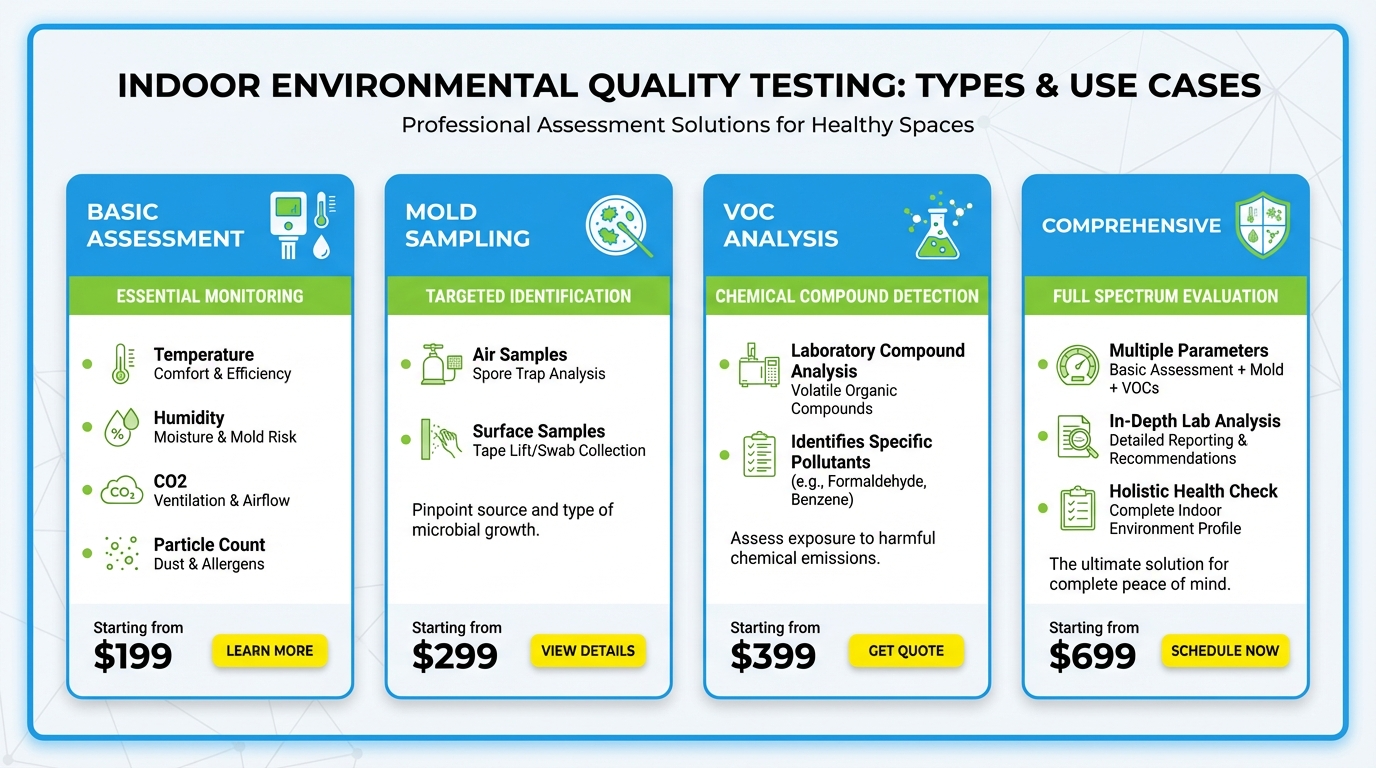
Testing costs vary based on what you need to measure and the complexity of your situation. Basic assessments that measure a few key parameters cost less than comprehensive evaluations that sample for multiple pollutants across different areas of your home.
National averages for indoor air quality testing fall in the range of $292-$584, with an average around $437 according to industry sources. Houston-area pricing generally aligns with these national figures, though specific costs depend on home size, number of samples required, types of analysis needed, and whether laboratory processing is included.
| Testing Type | What It Covers | Typical Use Case |
|---|---|---|
| Basic Assessment | Temperature, humidity, CO2, general particle count | General wellness check, HVAC evaluation |
| Mold Sampling | Air and/or surface samples for mold spores | Post-water damage, musty odors, health concerns |
| VOC Analysis | Laboratory analysis of volatile compounds | New construction, renovations, chemical sensitivity |
| Comprehensive | Multiple parameters, multiple locations, lab analysis | Unexplained symptoms, real estate transactions, legal documentation |
Flat Rates | No Hidden Fees | Same-Day Service Available
What Practical Steps Improve Indoor Air Quality Without Major Investment?
Many effective improvements require minimal investment. Controlling humidity remains the single most impactful action for Houston homes. The EPA recommends maintaining indoor relative humidity below 60%, with 50% or lower providing additional protection against dust mites and microbial growth.
Filter maintenance makes a significant difference in homes with central HVAC. Changing filters according to manufacturer recommendations—or more frequently in dusty conditions—keeps your system effective at removing particles. Upgrading to higher-efficiency filters captures smaller particles, though you should verify that your system can handle increased airflow resistance.
Source control prevents problems before they start. Fixing leaks promptly, venting bathrooms and kitchens properly, and allowing new materials to off-gas in ventilated areas reduces pollutant introduction. Using exhaust ventilation when cooking or cleaning removes contaminants at the source rather than circulating them throughout your home.
When Should You Call a Professional Instead of Handling IAQ Issues Yourself?
Certain situations warrant professional involvement regardless of your DIY capabilities. Carbon monoxide concerns require immediate attention from qualified technicians, as this odorless gas poses life-threatening risks. Similarly, extensive mold growth, persistent water intrusion, and HVAC system problems typically exceed homeowner repair scope.
Health symptoms that resist other explanations also justify professional assessment. When family members experience ongoing respiratory issues, allergic reactions, or other symptoms that improve away from home, systematic testing can identify causes that visual inspection misses. This is particularly important when vulnerable individuals—infants, elderly, immunocompromised—live in the home.
Limited Availability: Our technicians are booking 3-5 days out due to high demand this season. Call now to secure your appointment.
How Clean Air Houston Pro Addresses Your Specific Indoor Air Quality Needs
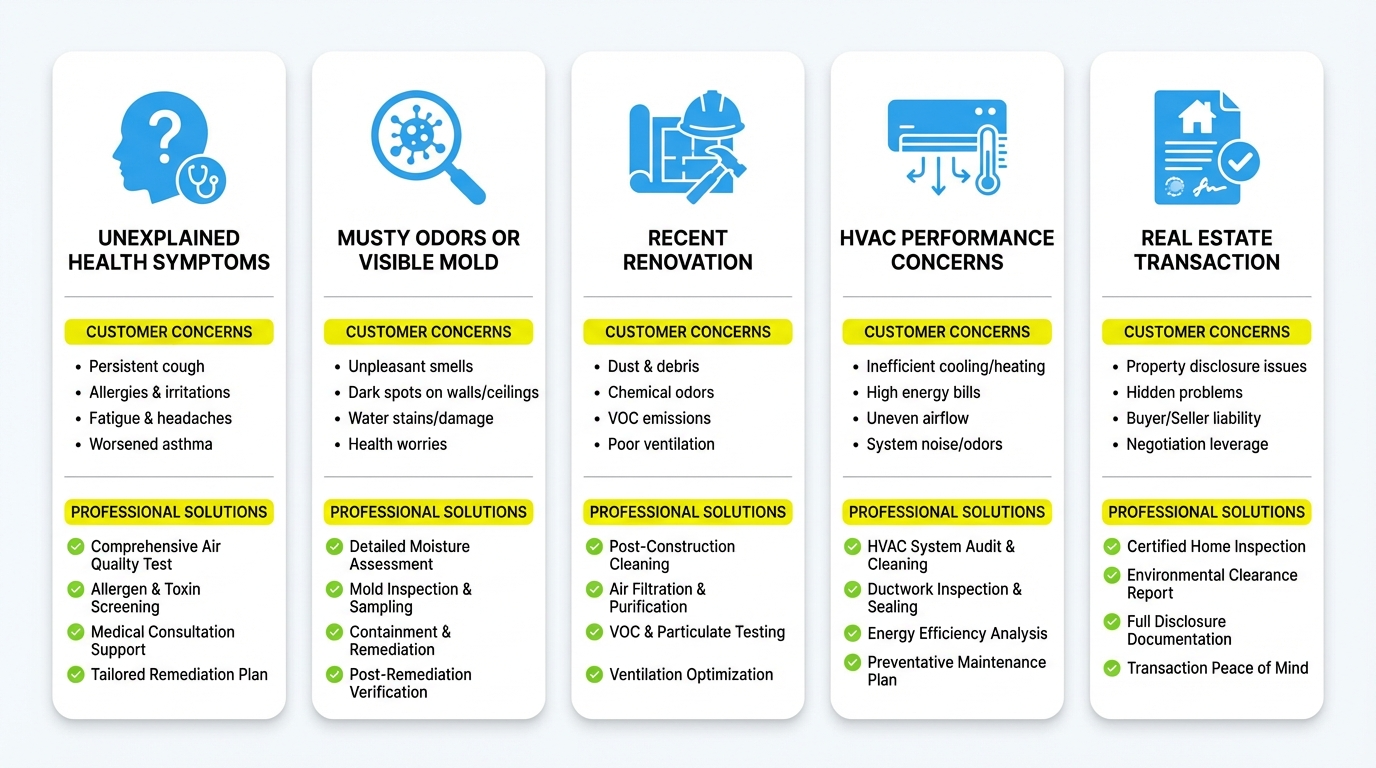
Effective indoor air quality improvement requires understanding your specific situation rather than applying generic solutions. Clean Air Houston Pro provides thorough assessment that identifies exactly what issues affect your home, followed by targeted recommendations based on findings rather than assumptions.
The approach emphasizes practical solutions that fit Houston’s unique conditions. Rather than one-size-fits-all recommendations, you receive guidance specific to your home’s construction, HVAC system, occupancy patterns, and the particular pollutants identified in testing. This targeted approach maximizes improvement while minimizing unnecessary expense.
| Your Concern | How Professional Assessment Helps |
|---|---|
| Unexplained health symptoms | Identifies specific pollutants that may contribute to symptoms |
| Musty odors or visible mold | Determines extent of contamination and moisture sources |
| Recent renovation or new construction | Measures VOC levels and off-gassing from new materials |
| HVAC performance concerns | Evaluates system effectiveness for air quality management |
| Real estate transaction | Provides documentation of current conditions |
“Very responsive and professional. They got me on their schedule day after I called. The technicians were knowledgeable and took time to explain everything.”
Frequently Asked Questions
+
+
+
+
+
+
Indoor air quality affects your family’s health, comfort, and quality of life every day. Professional assessment provides clear answers and actionable solutions specific to your Houston home.
Flat Rates | No Hidden Fees | Same-Day Service Available

