
Reading Time: 5 minutes
Home Air Quality Health Houston: A Complete Guide to Breathing Wellness
- Houston’s unique climate creates indoor air quality challenges including high humidity, ozone, and mold growth that directly impact respiratory health
- Indoor air can contain 2-5 times higher pollutant concentrations than outdoor air, making home air quality management essential
- Maintaining humidity between 30-50% prevents mold growth and dust mite proliferation in Houston homes
- Professional duct cleaning and HVAC maintenance address hidden contamination that DIY methods cannot reach
- Checking the Air Quality Index before opening windows protects your family during high ozone days
+
- What Influences Your Home’s Air Quality?
- Health Implications of Poor Home Air Quality
- Why Does Houston’s Climate Create Unique Challenges?
- How Can You Tell If Your Home’s Air Is Making You Sick?
- What Steps Actually Improve Home Air Quality in Houston?
- Common Mistakes Houston Homeowners Make
- When Should You Open or Close Windows?
- When Should You Seek Professional Help?
- Frequently Asked Questions
Houston residents face a unique combination of environmental challenges that directly impact the air inside their homes. From ground-level ozone during hot summer months to persistent humidity that encourages mold growth, understanding home air quality health Houston is essential for protecting your family’s respiratory health. Many people assume that closing their doors and windows shields them from outdoor pollution, but indoor air can actually contain higher concentrations of certain pollutants than the air outside.
Clean Air Houston Pro recognizes these challenges and works with homeowners throughout the greater Houston area to create healthier indoor environments. This guide explores everything you need to know about maintaining a healthy home, from identifying common pollutants to implementing practical solutions for better breathing wellness.
What Influences Your Home’s Air Quality?
Multiple factors work together to determine the quality of air circulating through your Houston home. Understanding these influences helps you identify problem areas and prioritize solutions. Indoor air quality depends on the balance between pollutant sources, ventilation rates, and filtration effectiveness. When this balance tips toward pollutant accumulation, health symptoms often follow.
Common Indoor Air Pollutants
Volatile Organic Compounds represent one of the most significant yet overlooked sources of indoor air pollution. According to EPA research on VOCs, concentrations of these chemicals inside homes can be significantly higher than outdoor levels. Common sources include paints, cleaning products, air fresheners, and building materials.
Dust mites and pet dander create ongoing challenges for respiratory health, particularly in Houston’s humid climate where dust mite populations thrive. These microscopic allergens accumulate in bedding, upholstered furniture, and carpeting.
Carbon monoxide poses a silent but serious threat to home air quality health. The CDC describes carbon monoxide as an odorless, colorless gas that can cause sudden illness or death. Common household sources include gas stoves, water heaters, furnaces, and attached garages where cars idle.
Mold and mildew represent particularly problematic pollutants in Houston homes. The combination of high outdoor humidity, air conditioning, and occasional flooding creates ideal conditions for mold growth. EPA guidance recommends maintaining indoor relative humidity between 30 and 50 percent to discourage mold development.
The Impact of Outdoor Air Quality on Your Home
What happens outside your home directly affects what you breathe inside. Houston faces significant challenges with ground-level ozone, particularly during summer months when heat and sunlight react with emissions from vehicles and industrial sources. The Texas Commission on Environmental Quality provides regular updates on ozone levels.
Checking the Air Quality Index before making decisions about ventilation helps protect your family’s respiratory health. Learn how to understand the Air Quality Index for Houston residents on our dedicated page about Air Quality Index Houston.
“They did a fantastic job. The Houston allergens and poor air quality in my home were problematic. Scheduling was easy, and the team was professional and thorough.”
Health Implications of Poor Home Air Quality

The effects of breathing contaminated indoor air range from mild irritation to serious chronic conditions. Recognizing symptoms early allows you to take corrective action before health problems worsen. Many people live with symptoms for years without connecting them to their home environment.
Short-Term Symptoms
Immediate reactions to poor indoor air quality often mimic other conditions, making diagnosis difficult. According to CDC fact sheets on indoor air quality, common symptoms include headaches, dry or irritated eyes, nausea, fatigue, runny nose, sore throat, coughing, and skin rashes. These symptoms typically improve when you leave the affected space and return when you come back home.
People with existing allergies or asthma often experience more intense reactions than others in the same household. Children and elderly family members may also show symptoms before healthy adults notice any problems.
Long-Term Health Risks and Respiratory Health
Prolonged exposure to indoor air pollutants creates cumulative health effects that may take years to manifest. Research documents connections between poor indoor air quality and the development or worsening of asthma, chronic respiratory conditions, cardiovascular problems, and even neurological effects from certain chemical exposures.
Children growing up in homes with poor air quality face elevated risks for developing asthma and allergies that may persist throughout their lives. Creating a healthy home environment becomes especially critical when sensitive individuals live in the household.
Flat Rates | No Hidden Fees | Same-Day Service Available
Why Does Houston’s Climate Create Unique Air Quality Challenges?
Houston’s subtropical climate creates a perfect storm of conditions that challenge indoor air quality. Understanding these local factors helps homeowners develop targeted strategies rather than applying generic advice that may not address Houston-specific concerns.
Summer months bring elevated ozone levels that frequently trigger air quality alerts. High temperatures combined with abundant sunlight catalyze chemical reactions between nitrogen oxides and volatile organic compounds, producing ground-level ozone. This pattern repeats throughout the warm season, with worst conditions typically occurring during afternoon hours on hot, still days.
Humidity presents year-round challenges for Houston homes. Moisture from the Gulf of Mexico keeps relative humidity levels high, often exceeding the 50 percent threshold recommended by the EPA for healthy indoor environments. This excess moisture encourages dust mite reproduction, promotes mold growth, and creates uncomfortable living conditions.
Hurricane season and flooding events introduce additional concerns about water damage and subsequent mold growth. Homes that experience even minor water intrusion may develop hidden mold problems that affect air quality for years afterward.
How Can You Tell If Your Home’s Air Is Making You Sick?
Connecting health symptoms to indoor air quality requires careful observation of patterns. The relationship between symptoms and location provides the strongest evidence of an indoor air quality problem. When respiratory symptoms, headaches, or fatigue improve significantly when you’re away from home and return when you come back, your indoor environment deserves investigation.
| Symptom Pattern | Possible Air Quality Issue | Recommended Action |
|---|---|---|
| Symptoms improve when away from home | General indoor air quality problem | Professional air quality assessment |
| Worse symptoms in morning | Bedroom-specific issue (bedding, humidity) | Check humidity levels, inspect for mold |
| Symptoms during HVAC operation | Duct contamination or filter issues | Duct inspection and filter replacement |
| Reactions after cooking | Combustion byproducts, poor ventilation | Use exhaust fans, check gas appliances |
| Musty smell present | Mold or mildew growth | Locate and remediate moisture source |
Physical signs in your home also indicate air quality concerns. Visible mold growth, persistent condensation on windows, musty or chemical odors, and excessive dust accumulation all suggest problems that affect the air you breathe.
“Very responsive and professional. They got me on their schedule day after I called. The technicians were knowledgeable and took time to explain everything.”
What Steps Actually Improve Home Air Quality in Houston?
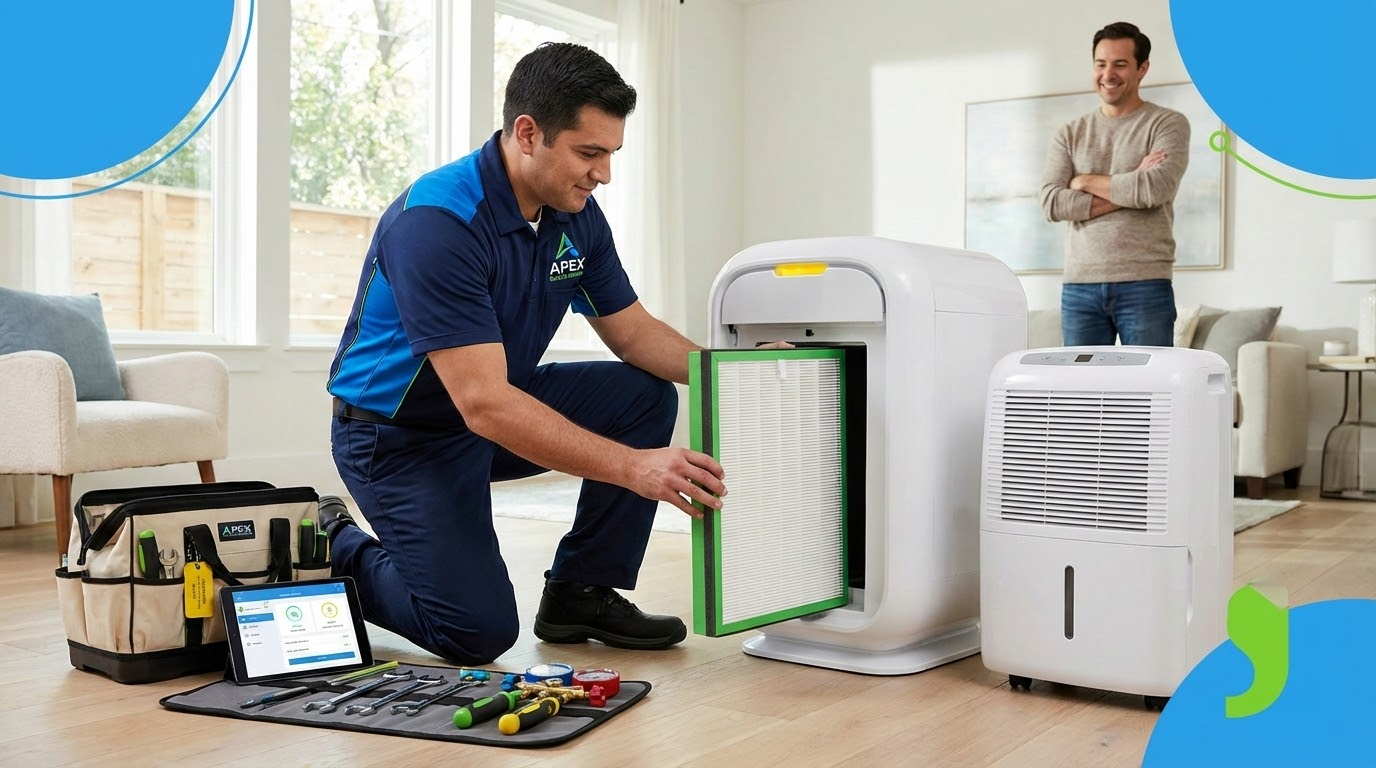
Effective improvement strategies address both pollutant sources and air handling systems. Systematic approaches that identify and prioritize issues yield better outcomes for breathing wellness.
Ventilation and Airflow
Proper ventilation dilutes indoor pollutants with fresher air, but Houston’s climate requires careful timing. Opening windows when outdoor air quality is good and humidity is relatively low provides beneficial air exchange. However, during ozone alerts or high-humidity periods, mechanical ventilation with filtration becomes the safer choice.
Exhaust fans in bathrooms and kitchens serve critical functions beyond odor removal. These fans remove moisture at its source before it can spread throughout your home and encourage mold growth. Running bathroom fans during and for 15-20 minutes after showers prevents humidity spikes.
Air Purification Systems
Air purifiers can meaningfully reduce certain pollutants when properly selected and used. Research demonstrates that HEPA air cleaners effectively reduce indoor particulate matter and can decrease asthma symptoms in children. However, EPA guidance on air cleaners emphasizes that these devices work best as supplements to source control rather than primary solutions.
HEPA filters capture particles as small as 0.3 microns with high efficiency, trapping dust, pollen, pet dander, and many mold spores. Activated carbon filters address gaseous pollutants and odors that HEPA filters cannot remove.
Explore solutions that can significantly improve your residential air quality with Residential Air Quality services designed specifically for Houston homes.
Humidity Control
Managing indoor humidity represents one of the most impactful interventions for Houston homes. EPA recommendations for indoor relative humidity between 30 and 50 percent balance comfort, health, and building protection. Levels above 60 percent create conditions favorable for mold growth and dust mite proliferation.
Dehumidifiers supplement air conditioning systems that may struggle to remove enough moisture during Houston’s most humid periods. Addressing moisture sources prevents humidity problems at their origin.
Regular Cleaning and Maintenance
Consistent cleaning practices reduce the reservoir of particles available to become airborne. Vacuuming with HEPA-equipped machines captures fine particles rather than redistributing them. Washing bedding weekly in hot water kills dust mites and removes accumulated allergens.
HVAC filter replacement following manufacturer recommendations maintains system efficiency and air cleaning capability. Professional HVAC system cleaning addresses contamination that accumulates in ductwork over years of operation.
Our certified technicians can assess your home’s air quality and recommend targeted solutions for your specific situation.
Or call us: (832) 737-8500
What Mistakes Do Houston Homeowners Commonly Make?
Well-intentioned efforts to improve indoor air quality sometimes backfire when based on incomplete information. Avoiding common mistakes helps you get better results from your investment of time and money.
Opening windows during ozone alerts introduces the very pollutants you’re trying to avoid. High ozone days require keeping windows closed and relying on filtered mechanical ventilation. Checking AQI forecasts before deciding on natural ventilation prevents this counterproductive practice.
Over-relying on air fresheners and scented products masks odors while adding VOCs to your indoor air. Many popular fragrance products contain volatile organic compounds that contribute to poor air quality. Addressing odor sources rather than covering them produces better outcomes.
Ignoring humidity problems while focusing on other interventions allows mold growth to continue unchecked. Air purifiers cannot solve mold problems because new spores continuously generate from growing colonies.
Running HVAC systems with dirty filters restricts airflow, reduces efficiency, and can actually worsen air quality. Regular filter inspection and replacement costs little compared to the energy waste and health consequences of neglected filters.
When Should You Open or Close Windows in Houston?
The decision to ventilate naturally or rely on mechanical systems depends on current conditions both inside and outside your home. Making informed choices maximizes the benefits while avoiding the drawbacks of each approach.
| Condition | Window Recommendation | Reason |
|---|---|---|
| AQI Green (0-50) | Open when comfortable | Outdoor air is clean |
| AQI Yellow (51-100) | Limited opening acceptable | Moderate pollution levels |
| AQI Orange or higher | Keep closed | Pollution harmful for sensitive groups |
| High outdoor humidity | Keep closed | Prevents moisture intrusion |
| Ozone Action Day | Keep closed | Peak pollution conditions |
Natural ventilation works best during transitional seasons when outdoor temperatures, humidity, and air quality all favor open windows. Early morning hours often offer the best combination of lower temperatures, better air quality, and reduced humidity.
When Should You Seek Professional Help?
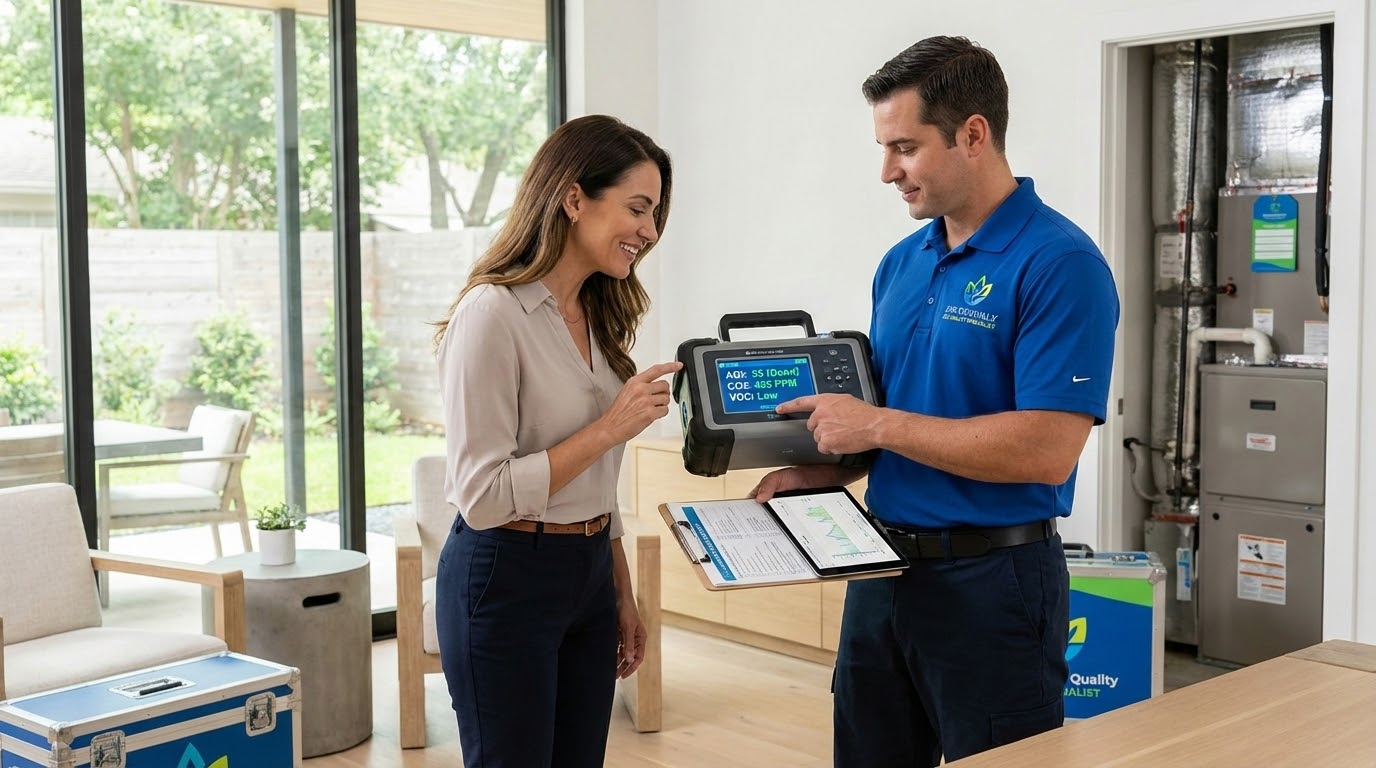
Some air quality problems exceed what homeowners can effectively address through DIY measures. Recognizing when professional assessment and intervention are needed prevents wasted effort and ensures problems receive appropriate solutions.
Persistent symptoms despite improvement efforts indicate that the actual problem hasn’t been identified or adequately addressed. Professional assessment can uncover hidden issues like concealed mold growth, duct system contamination, or combustion appliance problems that escape casual inspection.
Visible mold covering more than about 10 square feet typically requires professional remediation. Disturbing significant mold growth without proper containment and protection can dramatically worsen air quality and health exposure.
After water damage events, professional assessment helps determine whether hidden moisture threatens future mold development. Moisture meters and thermal imaging can detect water in wall cavities, under flooring, and in other concealed locations.
Carbon monoxide detector alerts require immediate evacuation and professional investigation before returning home. Never ignore CO alarms or assume they’re malfunctioning.
“Stacy’s team was awesome fast and professional! They explained everything to me before they did anything. Very fair pricing. I will definitely use them again.”
Clean Air Houston Pro offers comprehensive air quality services that address the full range of issues Houston homeowners encounter. From duct cleaning and HVAC maintenance to humidity management and filtration upgrades, professional support ensures that your improvement efforts produce real results for your family’s breathing wellness.
Frequently Asked Questions
+
+
+
+
+
+
+
Understanding the challenges is important, but implementing effective solutions creates the healthy living environment your family deserves.
Flat Rates | No Hidden Fees | Same-Day Service Available

