
Reading Time: 5 minutes
Emergency Air Duct Service Houston: When Indoor Air Problems Cannot Wait
- Burning smells, visible mold, and complete AC failure during extreme heat are genuine emergencies requiring immediate professional attention
- Musty odors from vents typically indicate mold growth that can spread throughout your home within 48 hours
- Leaky ducts can lose 20-30% of conditioned air and pull contaminated air from attics into your living spaces
- Same-day emergency duct service is available throughout Houston to protect your health and property
- Always verify Texas TDLR licensing before allowing any contractor to work on your HVAC system
+
- Is Your Air Quality Problem Actually an Emergency?
- Strange Odors Coming From Your Vents
- Visible Mold Around Vents or Inside Ductwork
- When Allergy Symptoms Suddenly Worsen
- Complete AC Failure During Houston’s Extreme Heat
- Unusual Noises That Demand Immediate Attention
- How Duct Problems Affect Energy Costs
- What to Do Before the Technician Arrives
- Why Clean Air Houston Pro Handles Emergencies Differently
- Frequently Asked Questions
Strange odors filling your home, visible mold around vents, or an AC system that suddenly stops working entirely demand immediate attention. These situations go beyond routine maintenance and require swift professional intervention to protect both your health and your property. When Houston’s heat and humidity combine with a failing HVAC system or compromised ductwork, the consequences escalate rapidly.
Understanding which air quality issues constitute true emergencies helps homeowners make informed decisions about when to call for immediate help. Some problems can wait until regular business hours, while others present genuine health risks or could cause significant property damage if left unaddressed even overnight. Clean Air Houston Pro responds to these urgent situations with same day service designed to restore safe, comfortable indoor air as quickly as possible.
Limited Same-Day Appointments Available – Houston technicians currently responding to emergency calls in your area
Is Your Air Quality Problem Actually an Emergency?
Not every HVAC issue requires an after-hours service call, but certain situations genuinely cannot wait. A persistent musty smell often signals mold or mildew growth within the system or ductwork. According to the CDC, mold can enter homes through HVAC systems, and visible mold inside vents or return registers represents a clear emergency requiring immediate attention. The health risks associated with mold exposure include respiratory symptoms, allergic reactions, and potential complications for those with asthma or compromised immune systems.
Complete system failure during extreme heat presents another genuine emergency. Houston summers regularly exceed 100 degrees, and losing cooling capacity puts vulnerable household members at serious risk. When your AC stops working entirely, blows only lukewarm air, or shows significantly reduced airflow throughout the home, the underlying cause could range from duct blockages to critical mechanical failures requiring urgent diagnosis.
Strange Odors Coming From Your Vents: What Different Smells Indicate
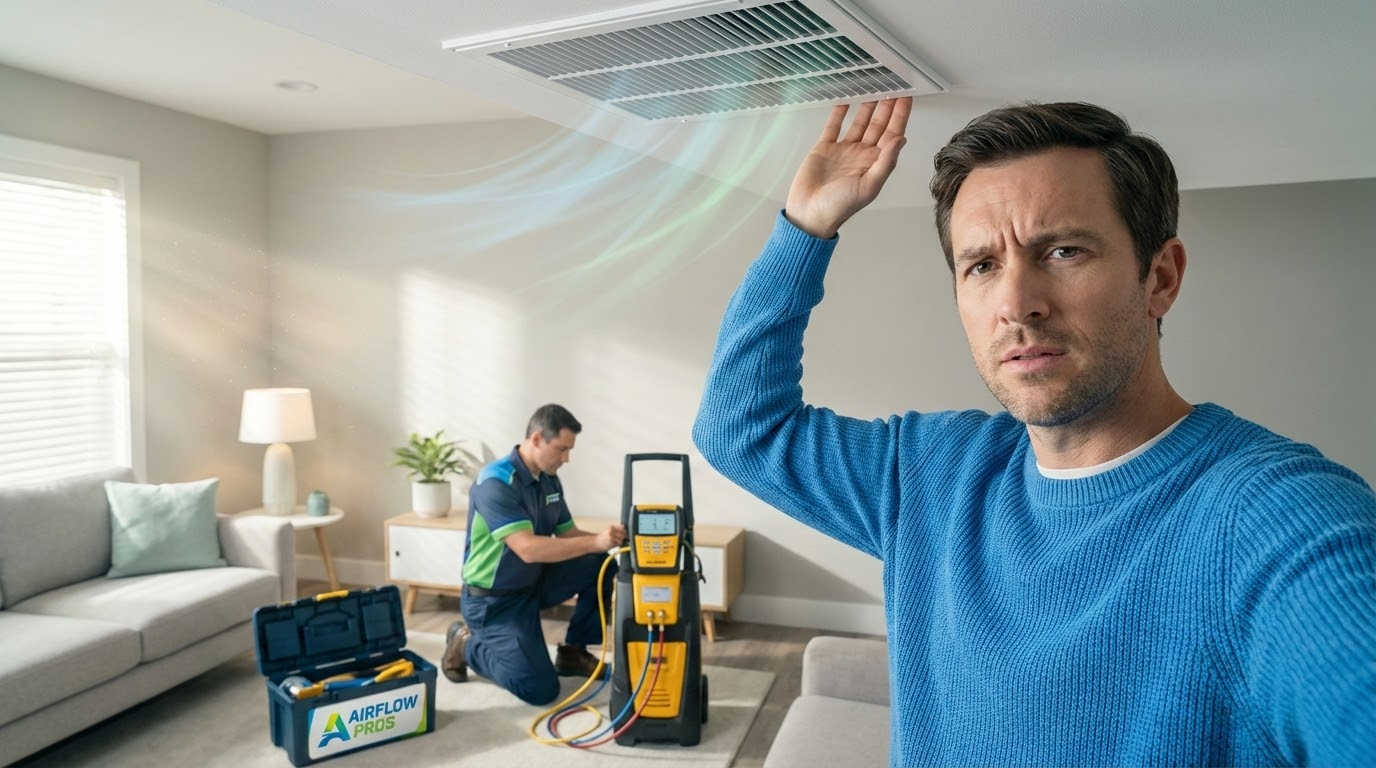
The type of odor emanating from your HVAC system provides important diagnostic information. A musty, earthy smell typically indicates mold or mildew growth somewhere in the system, often developing in areas where condensation collects or where insulation has become water-damaged. This smell tends to worsen when the system first kicks on and may intensify after periods of high humidity or rain.
A burning smell requires immediate action. If you detect electrical burning, melting plastic, or smoke odors, turn off your HVAC system immediately and do not restart it until a licensed technician has inspected the equipment. These odors can indicate overheating motors, electrical shorts, or debris burning on heat exchangers. The CDC warns about carbon monoxide dangers from improperly functioning combustion appliances, making professional inspection essential before resuming operation.
| Warning Sign | Possible Cause | Urgency Level |
|---|---|---|
| Musty odor when AC runs | Mold in ducts or evaporator coil | Same day service recommended |
| Visible mold on vents | Moisture intrusion in duct system | Immediate attention required |
| Burning electrical smell | Motor overheating or wiring issue | Turn off system immediately |
| No airflow from vents | Disconnected duct or blower failure | Same day diagnosis needed |
| Sudden allergy flare-ups | Duct leak pulling contaminated air | Schedule prompt inspection |
Visible Mold Around Vents or Inside Ductwork
Discovering visible mold growth around air registers, inside visible duct sections, or on nearby ceiling or wall surfaces indicates a serious problem requiring professional remediation. The CDC emphasizes that when mold is visible or detectable by smell, the priority should be removing both the mold and addressing the underlying moisture source. Simply cleaning visible mold without fixing the moisture problem allows regrowth within days or weeks.
Mold inside ductwork presents particular challenges because every time the system operates, it potentially distributes spores throughout the entire home. This situation demands not only mold removal but also thorough inspection to identify how moisture entered the duct system in the first place. Common causes include condensation on poorly insulated ducts running through hot attic spaces, water intrusion from roof leaks, or drain line problems causing overflow near air handlers.
“They did a fantastic job. The Houston allergens and poor air quality in my home were problematic. Scheduling was easy, and the team was professional and thorough.”
Do not wait for mold to spread throughout your home. Our emergency team can diagnose and resolve the problem today.
Or call us: (832) 737-8500
When Allergy Symptoms Suddenly Worsen Throughout Your Household
A sudden increase in allergy symptoms, respiratory irritation, or unexplained headaches among multiple household members can indicate an urgent air quality problem originating from your HVAC system. Malfunctioning equipment or compromised ductwork can circulate elevated levels of allergens, dust, mold spores, or other contaminants that worsen these symptoms.
Leaky ducts present a particular concern because gaps in the return side of the system can pull contaminated air from attics, crawl spaces, or wall cavities. This unfiltered air bypasses your system’s filtration entirely and gets distributed throughout living spaces. According to the CDC’s National Institute for Occupational Safety and Health, research consistently links damp or moldy building conditions to respiratory symptoms and asthma exacerbation.
Complete AC Failure During Houston’s Extreme Heat
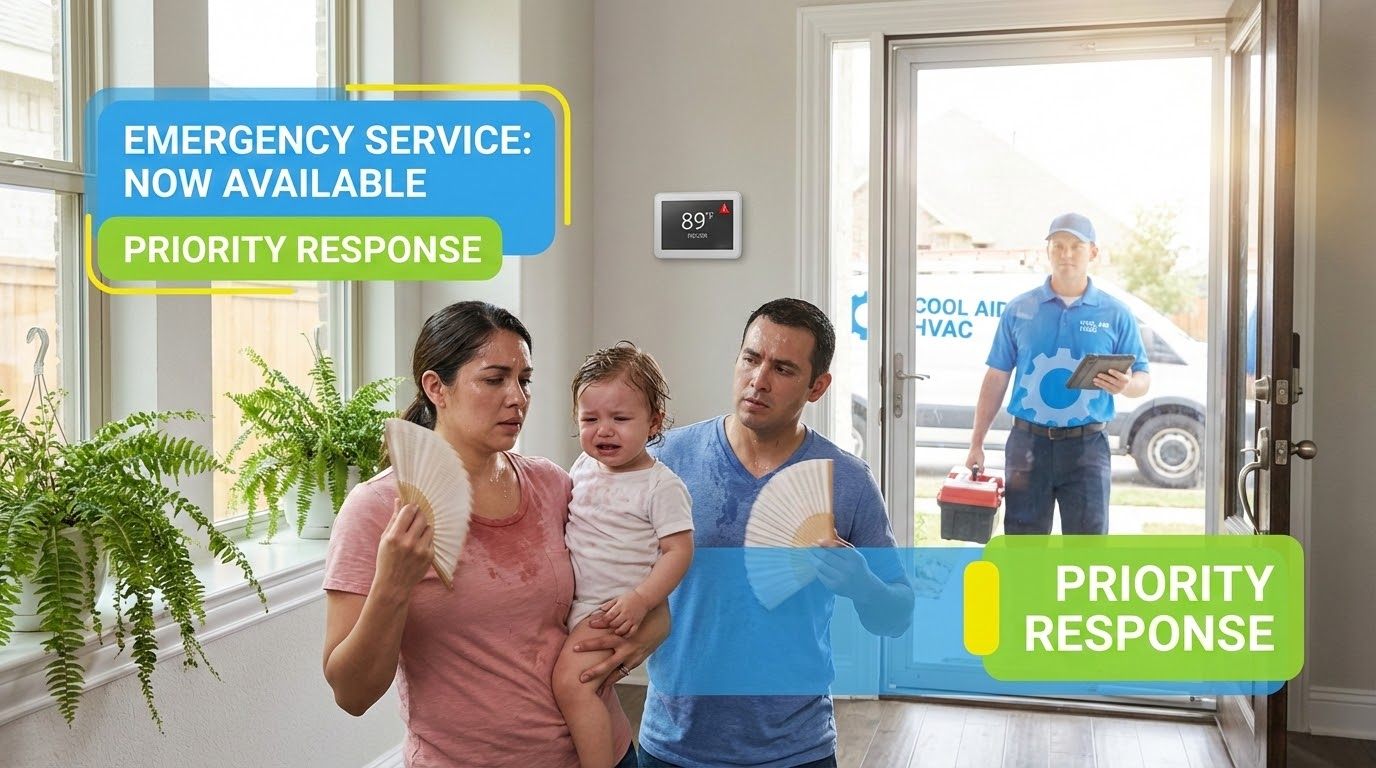
When your air conditioning stops working entirely during summer months, the situation quickly becomes more than an inconvenience. Indoor temperatures in an uncooled Houston home can reach dangerous levels within hours, particularly for elderly residents, young children, those with chronic health conditions, or pets. This scenario warrants immediate professional response.
Before calling for emergency service, check a few basic items. Verify your thermostat has power and is set correctly. Check your circuit breaker panel for tripped breakers. Inspect your outdoor unit to ensure it is running and not blocked by debris. If these quick checks do not reveal an obvious issue, contact a professional for urgent diagnosis. Clean Air Houston Pro maintains same-day availability specifically for these situations, understanding that Houston’s climate makes functioning air conditioning a genuine health necessity rather than mere comfort.
“Very responsive and professional. They got me on their schedule day after I called. The technicians were knowledgeable and took time to explain everything.”
Unusual Noises That Demand Immediate Attention
Certain sounds from your HVAC system or ductwork indicate problems that should not wait for regular scheduling. Grinding or metal-on-metal sounds often signal failing bearings in blower motors or fan assemblies. Continued operation risks complete motor failure or even fire. Loud banging when the system starts or stops can indicate ductwork problems, loose components, or compressor issues that worsen with each cycle.
High-pitched squealing or screeching typically points to belt problems in older systems or bearing failures in newer direct-drive units. While not always emergencies, these sounds indicate components operating under stress that could fail completely at any time. Rattling, vibrating, or flapping sounds from ductwork may indicate disconnected sections, loose connections, or deteriorating flexible duct material that compromises system efficiency and air quality.
Evidence of Pests in Your Ductwork
Discovering rodent droppings near vents, hearing scratching sounds from inside walls or ceiling spaces where ducts run, or noticing nesting materials visible through register openings indicates a pest problem requiring immediate professional attention. Rodents and insects in ductwork create multiple hazards beyond the obvious contamination concerns.
Rodents chew through duct material, insulation, and even electrical wiring, creating fire hazards and compromising system integrity. Their droppings and urine contaminate surfaces and become airborne when the system operates. Dead animals in ductwork create severe odor problems and additional health hazards. Addressing pest intrusion requires not only removing the animals and contaminated materials but also sealing entry points and sanitizing affected sections.
Flat Rates | No Hidden Fees | Same-Day Service Available
How Duct Problems Affect Energy Costs and System Longevity
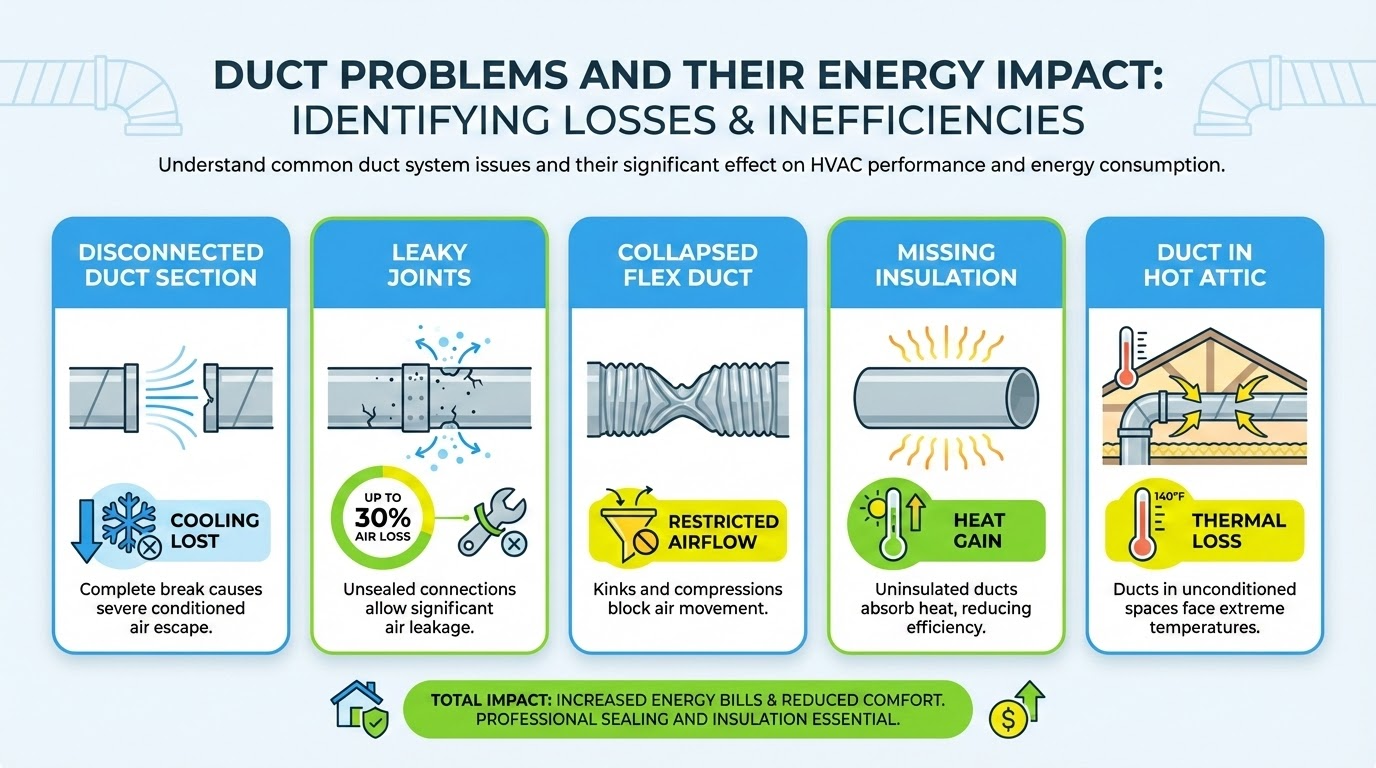
The U.S. Department of Energy states that duct losses represent one of the largest energy wasting factors in typical homes. Ducts running through unconditioned spaces like attics lose energy both through air leakage at connections and through heat transfer through duct walls. In Houston’s climate, where attic temperatures regularly exceed 140 degrees in summer, these losses force air conditioning systems to work dramatically harder to maintain comfort.
Beyond higher utility bills, this increased workload accelerates wear on system components. Compressors, blower motors, and other mechanical parts experience shortened lifespans when forced to run longer cycles to compensate for duct losses. Addressing duct problems often improves both immediate comfort and long-term system reliability while reducing monthly operating costs.
| Duct Problem | Energy Impact | Additional Consequences |
|---|---|---|
| Disconnected duct section | Cooling lost to attic entirely | One room stays hot, system overworks |
| Leaky joints and connections | Up to 30% air loss typical | Higher bills, uneven temperatures |
| Collapsed or crushed flex duct | Restricted airflow to affected rooms | System strain, comfort complaints |
| Missing or damaged insulation | Heat gain through duct walls | Condensation, potential mold |
| Duct running through hot attic | Significant thermal losses | Reduced delivered cooling capacity |
What to Do Right Now Before the Technician Arrives
When facing an air quality emergency, certain immediate actions can protect your household and potentially prevent additional damage while you wait for professional help. If you smell burning or see smoke, turn off your HVAC system at the thermostat and at the circuit breaker, then evacuate if smoke is visible. Do not attempt to investigate electrical problems yourself.
For non-electrical emergencies like strong mold odors or suspected duct problems, you can often leave the system running on fan-only mode while closing off the most affected rooms to limit contamination spread. Avoid the temptation to seal apparent duct problems with improvised materials. Standard fabric-backed duct tape fails quickly under temperature cycling and is not appropriate for actual duct sealing despite its name. The Department of Energy specifically warns against using this product on ducts, recommending mastic sealant or metal-backed tape instead.
Information to Gather for Your Emergency Service Call
Having specific information ready when you call for emergency service helps technicians prepare appropriately and often speeds the diagnostic process. Note when symptoms first appeared, which rooms are affected, any recent changes or events that might be relevant, and whether you have access to the attic, crawl space, or other areas where ductwork runs. If possible, take photos of visible problems like mold growth or disconnected ducts to share with the technician.
“Stacy’s team was awesome fast and professional! They explained everything to me before they did anything. Very fair pricing. I will definitely use them again.”
Why Clean Air Houston Pro Handles Emergencies Differently
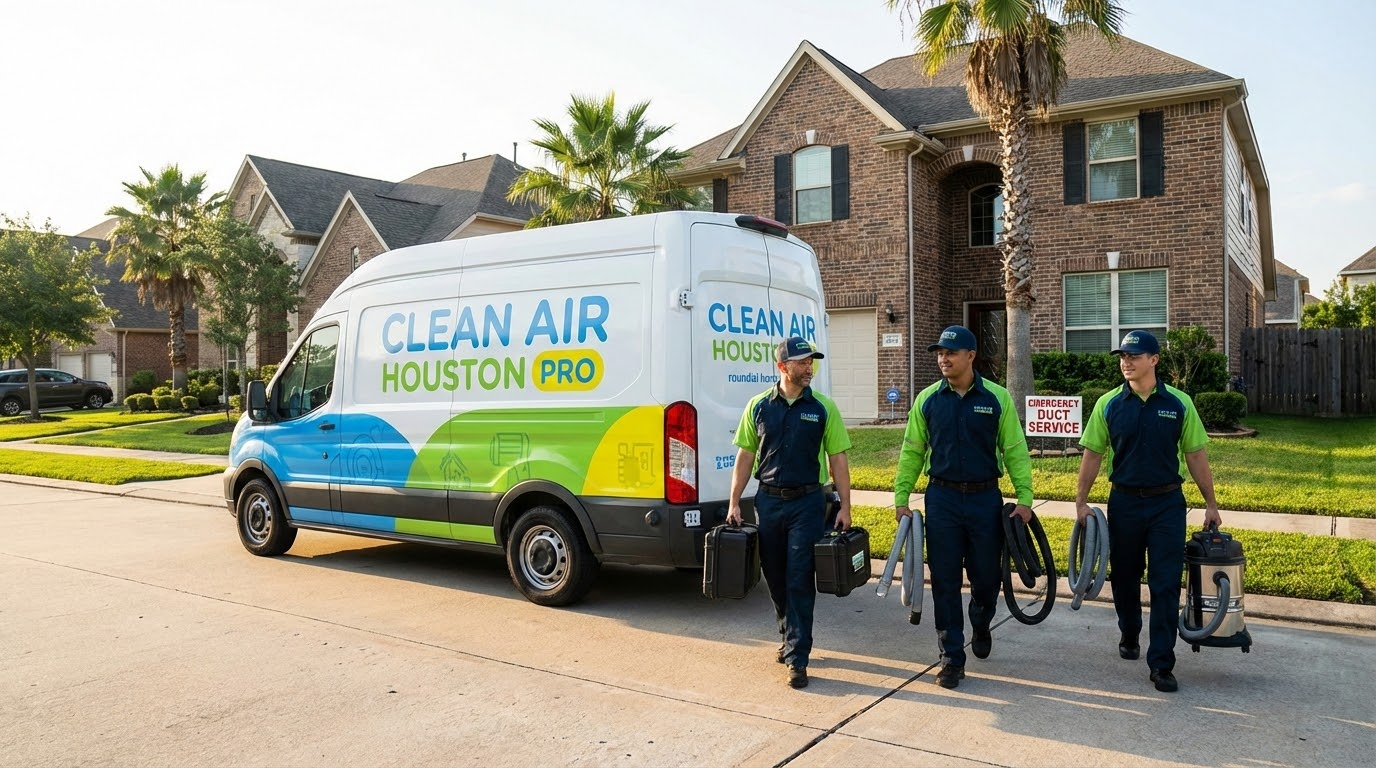
Responding to urgent air quality and duct problems requires both technical expertise and operational systems designed for rapid deployment. Clean Air Houston Pro maintains staffing and inventory specifically to address same day service needs throughout the Houston metropolitan area. Technicians arrive equipped to handle common emergency scenarios without delays waiting for parts or specialized equipment.
The diagnostic process prioritizes accurate problem identification before recommending solutions. Rather than pushing expensive replacements when repairs will resolve the issue, or performing quick fixes on problems requiring comprehensive solutions, technicians take time to properly assess the situation and explain findings clearly. This approach builds the trust that emergency situations demand, when homeowners must make quick decisions about significant expenses.
Clean Air Houston Pro also provides post-service verification, confirming that repairs have actually resolved the reported problems through appropriate testing and measurement. This verification gives homeowners confidence that the emergency has been properly addressed rather than simply patched temporarily.
Verifying Contractor Credentials in Texas
Texas requires HVAC contractors to hold licenses issued by the Texas Department of Licensing and Regulation. Before allowing anyone to work on your system, especially in an emergency when you may feel pressured to accept whoever is available, verify their credentials. Licensed contractors carry required liability insurance and have demonstrated competency through examination and experience requirements.
Avoiding Common Scams During Emergency Situations
Emergencies create vulnerability that unscrupulous operators exploit. The Texas Attorney General’s office provides guidance on avoiding home improvement scams that applies directly to HVAC emergency situations. Be wary of anyone who shows up unsolicited offering to inspect or repair your system. Legitimate companies do not typically canvass neighborhoods looking for problems to fix.
Get clear pricing information before authorizing work. Reputable emergency service providers quote diagnostic fees upfront and provide written estimates before proceeding with repairs. Be skeptical of dramatically low initial quotes that climb once work begins, or high-pressure tactics claiming immediate action is essential to avoid catastrophic consequences. Take time to verify credentials and get second opinions on major repairs even when the situation feels urgent.
Frequently Asked Questions
+
+
+
+
+
+
When strange odors, visible contamination, or complete system failures disrupt your home, waiting and hoping the problem resolves itself rarely works. Get professional assessment and solutions today.
Flat Rates | No Hidden Fees | Same-Day Service Available

