
Reading Time: 5 minutes
Navigating Houston’s Seasons: Your Complete Guide to Seasonal HVAC Preparation
- Houston’s extended cooling season means your AC works overtime, requiring proactive spring maintenance before peak summer heat
- Check and replace air filters monthly during high-use seasons to maintain efficiency and indoor air quality
- Professional HVAC tune-ups catch refrigerant leaks, electrical issues, and component wear before costly breakdowns occur
- Condensate drain lines clog frequently in Houston’s humidity, causing water damage and system shutoffs
- Schedule professional service in early spring or fall to avoid peak-season delays and emergency repair costs
+
- Understanding Houston’s Unique Climate Challenge
- Essential DIY Seasonal HVAC Maintenance Tasks
- When to Call the Pros: Professional HVAC Tune-Up Importance
- Why Houston’s Humidity Makes Drain Lines Fail
- Preparing for Houston’s Summertime Swelters
- What Makes Winter Cold Snaps Problematic
- Comparing DIY Maintenance Against Professional Service
- Storm Season Resilience
- Frequently Asked Questions
Understanding Houston’s Unique Climate Challenge
Houston presents a unique climate challenge for homeowners. The city experiences far more cooling degree days than heating degree days throughout the year, according to data from the U.S. Environmental Protection Agency. This means your air conditioning system works overtime during extended hot and humid summers, while occasional cold snaps can catch heating systems off guard after months of dormancy.
Proper seasonal HVAC preparation Houston homeowners undertake becomes essential for maintaining comfort and efficiency year-round. Without adequate preparation, systems strain under demanding conditions, leading to higher energy bills, unexpected breakdowns, and compromised indoor air quality. Clean Air Houston Pro understands these local challenges and emphasizes that proactive maintenance protects both your investment and your family’s comfort.
Seasonal maintenance encompasses two complementary approaches. Professional HVAC tune-ups conducted by qualified technicians address complex components requiring specialized tools and expertise. Meanwhile, DIY tasks performed by homeowners between professional visits maintain optimal performance and catch potential issues early. Together, these strategies form a comprehensive approach to keeping your system running smoothly regardless of what Houston weather brings.
Essential DIY Seasonal HVAC Maintenance Tasks
Taking an active role in maintaining your HVAC system between professional visits pays dividends in performance and longevity. Several tasks require no specialized training yet significantly impact how well your system handles seasonal demands. Understanding which maintenance activities you can safely perform empowers you to keep your system operating efficiently while knowing when professional intervention becomes necessary.
Air Filter Care: The First Line of Defense
Your HVAC air filter captures dust, pollen, pet dander, and other airborne particles before they circulate through your home or reach sensitive system components. ENERGY STAR recommends checking filters monthly and replacing them at least every three months, or whenever they appear visibly dirty. In Houston’s environment, where humidity promotes mold growth and allergens remain prevalent year-round, more frequent attention often proves necessary.
| Household Factor | Check Frequency | Replacement Interval |
|---|---|---|
| Standard household, no pets | Monthly | Every 90 days |
| Household with one pet | Every 3 weeks | Every 60 days |
| Multiple pets or allergy sufferers | Every 2 weeks | Every 30-45 days |
| Recent renovation or construction | Weekly | Every 30 days or when visibly dirty |
Clear the Outdoor Unit for Optimal Airflow
Your outdoor condenser unit requires unobstructed airflow to release heat effectively. Leaves, grass clippings, mulch, and overgrown shrubs create barriers that force the system to work harder. The U.S. Department of Energy recommends maintaining at least two feet of clearance around the unit and removing any debris that accumulates on or near the equipment.
Before each cooling season begins, inspect the area around your outdoor unit. Trim back vegetation, rake away accumulated debris, and gently rinse the exterior fins with a garden hose to remove dirt buildup. Avoid using pressure washers, which can bend the delicate aluminum fins and reduce efficiency.
Maintain Clear Condensate Drains
Houston’s humidity means your air conditioning system produces substantial condensation during normal operation. This moisture collects in a drain pan and exits through a condensate line. When this line becomes clogged with algae, mold, or debris, water backs up and can trigger safety shutoffs, cause water damage, or promote mold growth inside your home.
Locate your condensate drain line, typically a PVC pipe near your indoor unit that exits outside. Pour a cup of distilled white vinegar through the line every few months to discourage biological growth. If water pools around your indoor unit or you notice musty odors, the drain may require professional clearing.
“They did a fantastic job. The Houston allergens and poor air quality in my home were problematic. Scheduling was easy, and the team was professional and thorough.”
Flat Rates | No Hidden Fees | Same-Day Service Available
When to Call the Pros: The Importance of a Professional HVAC Tune-Up
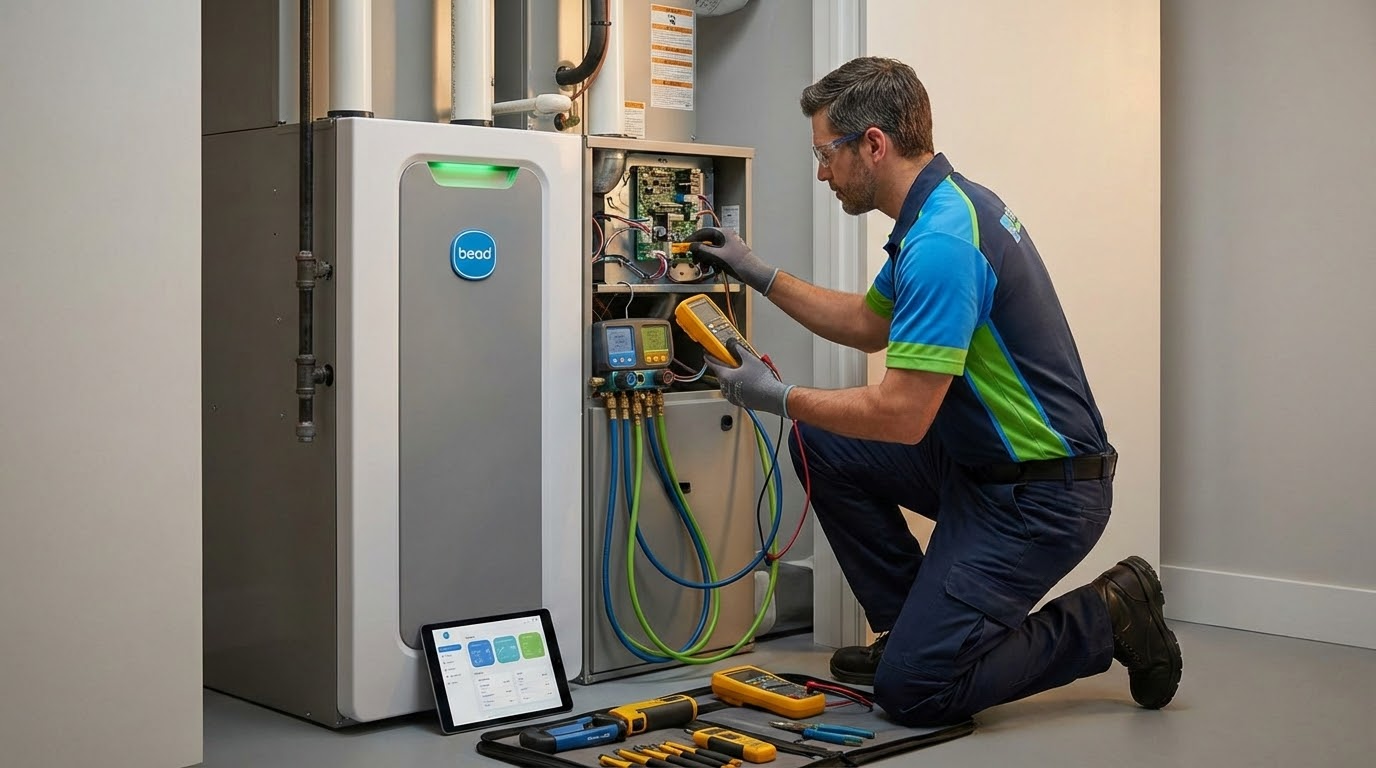
While DIY maintenance addresses accessible components, professional seasonal service reaches deeper into your system. Qualified technicians possess tools, training, and diagnostic capabilities beyond typical homeowner resources. Scheduling professional maintenance before peak demand seasons catches problems while solutions remain affordable and scheduling remains flexible.
What a Professional Tune-Up Includes
The ENERGY STAR Heating and Cooling Maintenance Checklist outlines comprehensive professional inspection elements. Technicians examine evaporator and condenser coils for dirt buildup affecting heat transfer. They verify refrigerant levels match manufacturer specifications, as improper charge reduces efficiency and can damage compressors.
Electrical connections receive inspection and tightening, since loose connections create safety hazards and cause component failures. Blower airflow measurements confirm adequate circulation throughout your home. Thermostat calibration ensures temperature readings match actual conditions. Controls and safety switches undergo testing to verify proper operation.
| Inspection Component | Purpose | Consequence if Neglected |
|---|---|---|
| Coil inspection and cleaning | Maintains heat transfer efficiency | Reduced cooling/heating capacity, higher energy use |
| Refrigerant level check | Ensures proper system charge | Compressor damage, inadequate cooling |
| Electrical connection review | Prevents safety hazards | Component failure, potential fire risk |
| Blower airflow measurement | Confirms adequate circulation | Hot/cold spots, system strain |
| Drain line inspection | Prevents water damage | Leaks, mold growth, safety shutoffs |
Benefits of Professional Service
Regular professional maintenance delivers measurable returns beyond immediate comfort. Systems operating at peak efficiency consume less energy, translating directly to lower utility bills. Components maintained within proper parameters experience less wear, extending equipment lifespan and delaying costly replacement purchases.
Professional technicians identify developing problems before they become emergencies. A worn capacitor replaced during routine maintenance costs far less than an after-hours emergency call when it fails during a heat wave. Clean Air Houston Pro provides thorough documentation of system conditions, helping homeowners track performance trends and plan for future needs.
“Stacy’s team was awesome fast and professional! They explained everything to me before they did anything. Very fair pricing. I will definitely use them again.”
Why Does Houston’s Humidity Make Drain Lines Fail So Often?
Houston’s subtropical climate creates conditions where air conditioning systems extract exceptional amounts of moisture from indoor air. This continuous condensation flows through drain lines designed for moderate moisture loads. When biological growth, dust, or debris partially restricts flow, standing water creates an environment where clogs develop rapidly.
Signs of drain line problems include water pooling around your indoor unit, musty odors near air vents, and unexplained system shutdowns. Many modern systems include float switches that disable operation when drain pans overflow, preventing water damage but leaving you without cooling during hot weather. Preventive attention to drain lines avoids these scenarios.
Peak summer season approaches fast. Schedule your professional tune-up now before appointment slots fill up and emergency wait times increase.
Preparing for Houston’s Summertime Swelters
Houston summers test air conditioning systems relentlessly. Temperatures regularly exceed 95 degrees while humidity makes conditions feel even more oppressive. Weather preparation for this demanding season should begin weeks before sustained heat arrives, allowing time to address any issues discovered during inspection.
Pre-summer preparation includes all DIY tasks outlined earlier: fresh filters, cleared outdoor units, and verified drain lines. Beyond these basics, run your system briefly to confirm cool air reaches all vents and the system cycles normally. Strange noises, weak airflow, or failure to reach set temperatures warrant professional attention before the rush of emergency calls overwhelms service schedules.
Clean Air Houston Pro recommends scheduling professional tune-ups in early spring, when technicians have availability and any needed repairs can occur without leaving your home uncomfortable. Waiting until temperatures peak means competing with numerous emergency calls and potentially waiting days for service.
Our certified technicians provide comprehensive seasonal tune-ups that catch problems before they become expensive emergencies.
Or call us: (832) 737-8500
What Makes Winter Cold Snaps So Problematic for Houston HVAC Systems?
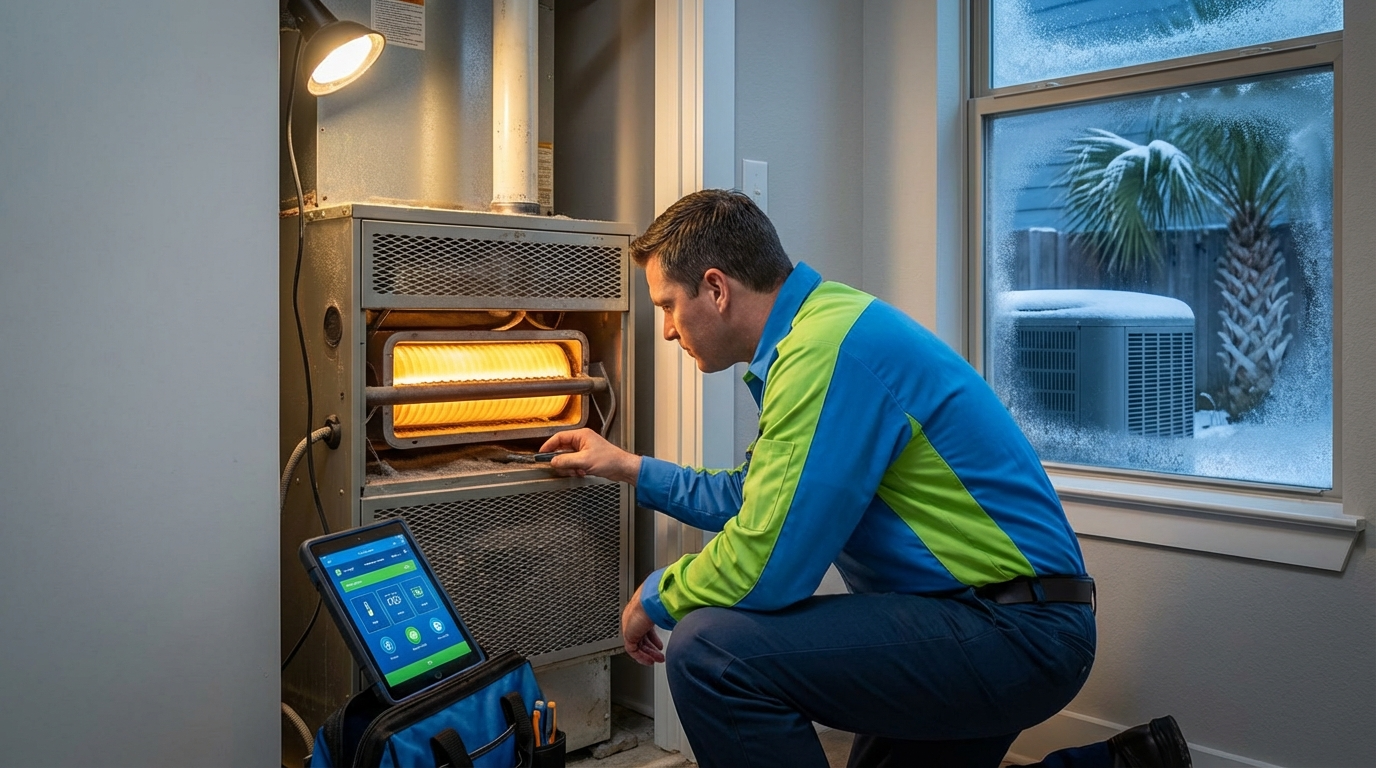
Houston heating systems often sit idle for months, then face sudden demands when Arctic fronts push through. This infrequent use allows problems to develop unnoticed. Dust accumulates on heat exchangers, lubricants degrade in motors, and electrical connections loosen from thermal cycling.
The U.S. Department of Energy emphasizes professional inspection of heat exchangers and venting systems before heating season. Cracked heat exchangers in gas furnaces can release carbon monoxide into living spaces, creating serious health hazards. The U.S. Consumer Product Safety Commission recommends yearly professional inspection of fuel-burning heating equipment.
Before the first significant cold front arrives, test your heating system briefly. Switch the thermostat to heating mode, set the temperature above current room temperature, and verify warm air flows from vents. Initial operation may produce a slight burning smell as dust burns off heat exchangers, but persistent odors or no heat production require professional diagnosis.
Comparing DIY Maintenance Against Professional Service Value
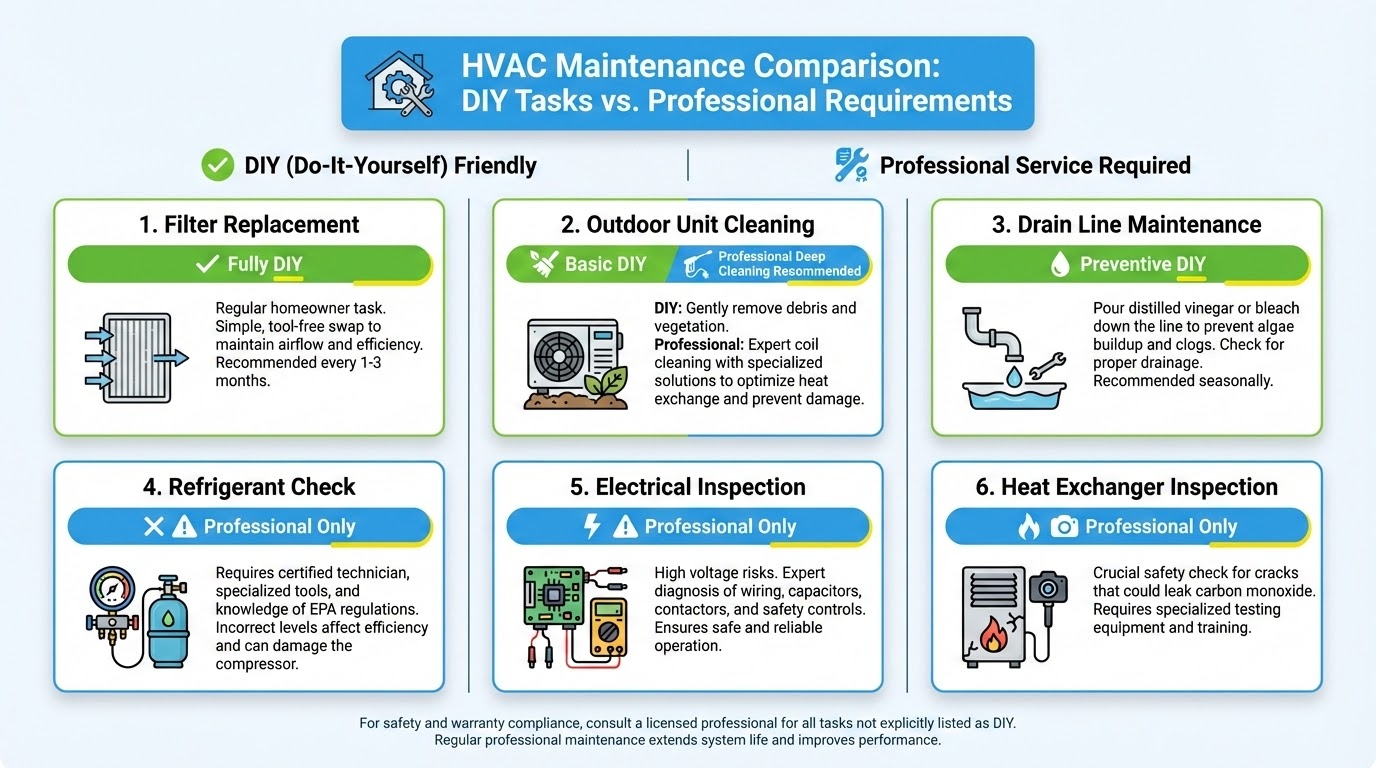
Understanding where DIY efforts end and professional expertise begins helps allocate maintenance budgets effectively. Both approaches contribute to system health, but they address different needs and carry different limitations.
| Maintenance Activity | DIY Feasibility | Professional Advantage |
|---|---|---|
| Filter replacement | Fully DIY appropriate | Can recommend optimal filter types |
| Outdoor unit cleaning | Basic cleaning DIY; deep cleaning professional | Coil cleaning without fin damage |
| Drain line maintenance | Preventive flushing DIY; clogs need professional | Proper clearing without damage |
| Refrigerant check | Not DIY appropriate | Requires certification and equipment |
| Electrical inspection | Not DIY appropriate | Safety hazard without training |
| Heat exchanger inspection | Not DIY appropriate | Critical for carbon monoxide safety |
How Can You Tell If Airflow Problems Exist Before the Season Peaks?
Airflow problems manifest subtly before becoming obvious failures. Rooms that never quite reach comfortable temperatures despite the system running indicate potential duct issues, blocked vents, or failing blower components. Unusually long run cycles suggest the system struggles to move sufficient air for proper heat exchange.
Simple tests reveal airflow concerns. Hold a tissue near supply vents while the system operates; weak flutter indicates reduced airflow. Compare temperatures from different vents throughout your home. Significant variations suggest duct problems, damper issues, or register obstructions requiring investigation.
Listen for changes in system sounds. Whistling often indicates air escaping through gaps or moving too fast through restrictions. Rumbling may signal duct vibration from improper support. Catching these indicators early prevents the discomfort and expense of mid-season failures.
“Very responsive and professional. They got me on their schedule day after I called. The technicians were knowledgeable and took time to explain everything.”
Storm Season Resilience: Preparing for Outages and Extreme Demand
Houston faces tropical storms, hurricanes, and severe thunderstorms that threaten power reliability. ERCOT, the state grid operator, occasionally issues Energy Emergency Alerts requesting reduced electricity consumption during peak demand periods. Preparing your HVAC system and home for these scenarios improves resilience when conditions deteriorate.
Before storm season, ensure outdoor units remain secured and elevated if in flood-prone areas. After power outages, avoid immediately running your system at full capacity. Allow the system to cycle normally rather than dropping thermostats dramatically, which can overload equipment and contribute to grid strain during recovery periods.
During extreme heat events coinciding with grid stress, raising thermostat settings slightly reduces demand while maintaining reasonable comfort. Pre-cooling your home during morning hours when electricity demand remains lower provides thermal buffer for afternoon peaks. These strategies protect your equipment while supporting overall grid stability.
Frequently Asked Questions

+
+
+
+
+
+
+
Your HVAC system protects your family’s comfort through Houston’s demanding climate. Proactive seasonal preparation prevents the frustration and expense of emergency failures while optimizing energy efficiency throughout the year.
Flat Rates | No Hidden Fees | Same-Day Service Available

